.svg)




Key Updates in Android, iOS, Flutter, React Native & AI for Mobile Developers
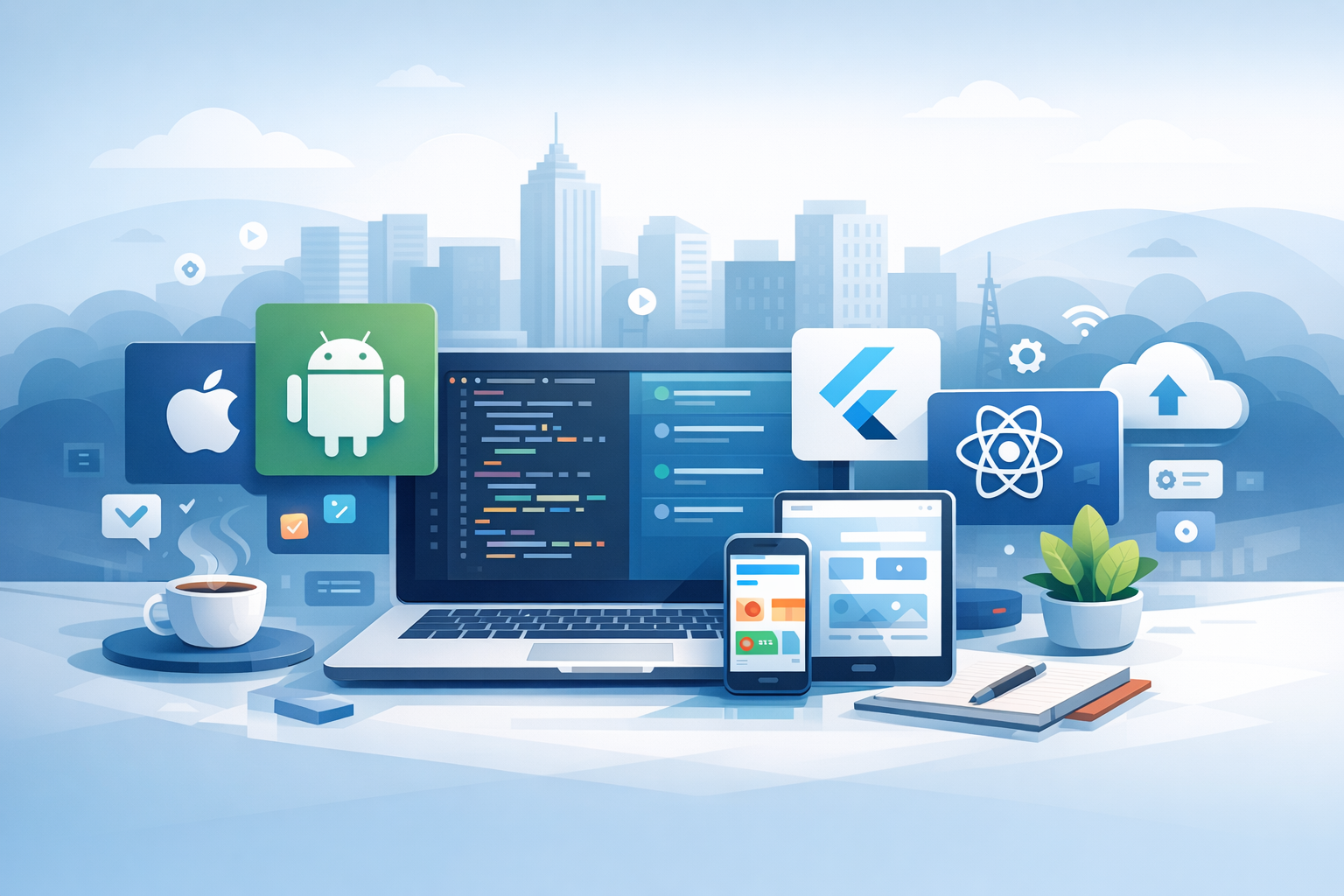
The mobile ecosystem continues evolving with improvements in build systems, cross-platform frameworks, and AI-powered development workflows. March 2026 brings incremental but important changes across Android, iOS, Flutter, and React Native that developers should be aware of.
This edition summarises the most relevant updates and trends for mobile engineers.
Native Android — March 2026 Updates
Android Gradle Plugin Improvements
Recent updates in the Android build ecosystem continue focusing on improving Gradle build performance and Kotlin integration. Google is encouraging developers to migrate toward newer Android Gradle Plugin versions to benefit from faster incremental builds and improved dependency handling.
Impact: Large Android projects with multi-module architecture can significantly improve build stability and CI performance.
Android 16 Development Cycle
Android 16 continues progressing through developer preview stages with improvements around device performance monitoring and large-screen device support.
Impact: Developers should begin compatibility testing early to avoid issues when the next Android version becomes widely available.
Google Play Services Updates
Updates to Google Play services continue refining APIs and improving privacy-related controls.
Impact: Applications using older Play services APIs should review dependencies to ensure compatibility with future updates.
Native iOS — March 2026 Updates
Pre-WWDC Ecosystem Stability
March typically represents a quieter period for Apple’s developer ecosystem as teams prepare for the next major announcements expected during WWDC later this year.
Developers are focusing on:
- stabilizing builds
- testing app compatibility
- preparing for future SDK updates
SwiftUI Adoption Continues
SwiftUI adoption is steadily increasing across production applications. Many organizations now use a hybrid UIKit + SwiftUI architecture, gradually migrating older UI components to SwiftUI.
Impact: Teams can modernize their UI stack without completely rewriting existing applications.
Xcode 26.4
Recent updates in Xcode 16 improve SwiftUI previews, debugging tools, and build performance for larger projects.
Swift 6.3 Adoption
Swift 6 continues gaining traction with improvements in concurrency safety and compiler diagnostics.
iOS SDK Updates
Apple continues refining the iOS SDK while developers prepare for larger announcements expected during WWDC.
Apple App Store — March 2026 Update
iOS SDK Requirement Update (Error 90725)
Apple has announced that starting April 28, 2026, all iOS and iPadOS apps must be built using the iOS 26 SDK (Xcode 26 or later).
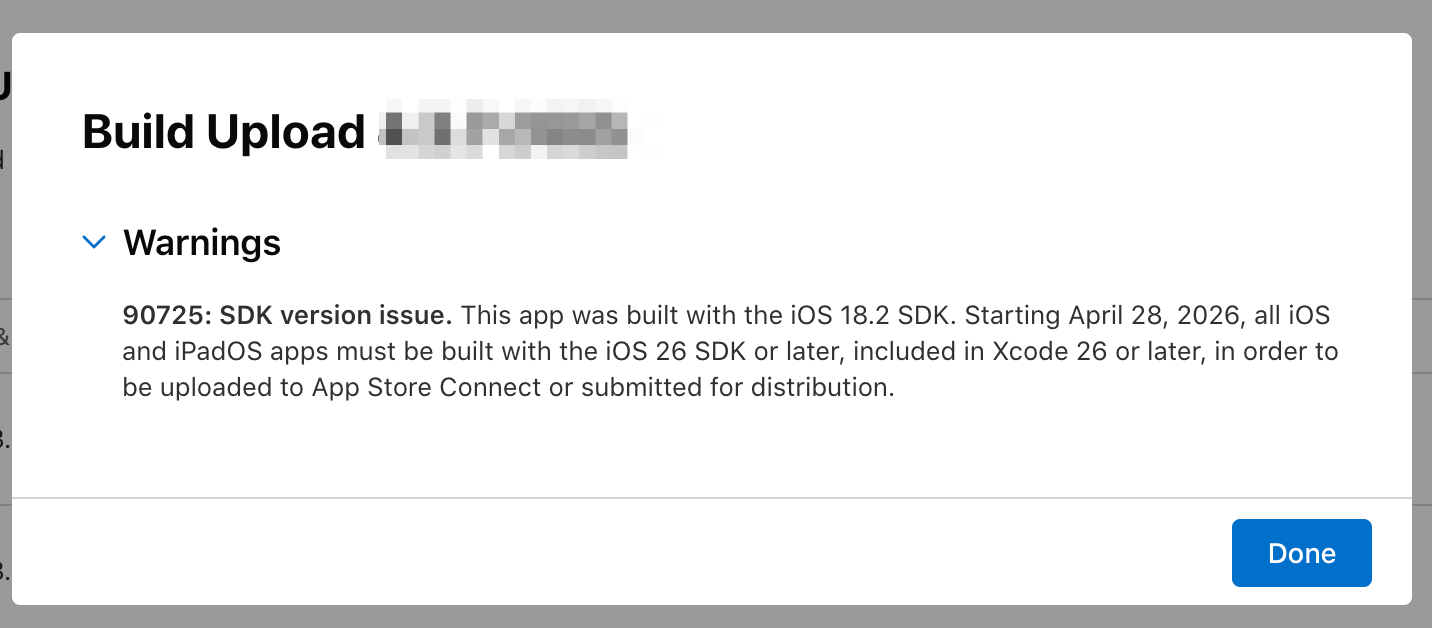
Apps built with older SDKs (e.g., iOS 18.2) will trigger Error 90725 and will not be accepted for:
- new app submissions
- app updates on App Store Connect
Why This Matters
- Apple is enforcing faster SDK adoption cycles
- Ensures apps use the latest APIs, security standards, and device support
- Older apps will face hard rejection during submission
Impact
- Flutter apps using older Xcode toolchains
- React Native apps have not been upgraded recently
- Native iOS apps with outdated dependencies
- Projects not maintained in the last 6–12 months
Action Required
- Upgrade to Xcode 26+
- Rebuild apps using iOS 26 SDK
- Update all third-party SDKs / plugins
- Run full regression testing before submission
Flutter — March 2026 Updates
Flutter 3.41 (Latest Stable Series)
Flutter 3.41 continues improving framework stability and performance. The release focuses on rendering optimizations and smoother UI performance across mobile and desktop platforms.
Flutter Framework Modularization
The Flutter team is gradually separating platform UI layers, such as Material and Cupertino widgets, into modular packages, enabling faster updates without waiting for full SDK releases.
Rendering & Engine Performance Improvements
Engine updates improve animation smoothness and frame consistency in complex UI scenarios, especially for apps with heavy animations or custom widgets.
Developer Impact: Developers can expect better runtime performance, easier framework updates, and improved scalability for large Flutter applications.
React Native — March 2026 Updates
React Native 0.84 (Latest Release)
React Native 0.84 introduces improvements to performance, developer tooling, and the JavaScript runtime environment.
Hermes Engine Improvements
Hermes remains the default JavaScript engine, with additional performance optimisations that reduce app startup time and improve runtime efficiency.
New Architecture Adoption
React Native continues pushing developers toward the New Architecture (Fabric + TurboModules), improving communication between JavaScript and native layers.
Precompiled iOS Builds
Recent changes include precompiled iOS artefacts, which simplify project setup and significantly reduce build times during development.
Developer Impact: These updates improve performance, simplify builds, and help React Native scale better for large production applications.
Mobile Technology Trends
Mobile teams are increasingly using multiple frameworks (Multi-Framework Development) within the same product ecosystem.
For example:
- Native development for performance-critical features
- Flutter for UI-focused applications
- React Native for web-driven teams
This approach provides flexibility while optimizing both development speed and application performance.
AI- in Mobile App development

AI continues to transform how mobile applications are built, tested, and optimized. Several AI-powered tools are helping developers accelerate development workflows and improve application quality.
OpenAI Codex / Codex CLI
OpenAI’s Codex-based tools are evolving into task-oriented coding agents capable of generating code, fixing bugs, and performing multi-file refactoring across large projects.
Impact: Helps mobile engineers automate repetitive coding tasks and speed up development.
GitHub Copilot
GitHub Copilot continues improving its AI-assisted code generation, supporting multiple programming languages commonly used in mobile development including Kotlin, Swift, Dart, and JavaScript.
Impact: Improves developer productivity by suggesting context-aware code and reducing manual coding effort.
Expo AI Tools (React Native Ecosystem)
Expo is exploring AI-powered developer tools to help automate UI generation and project configuration for React Native applications.
Impact: Simplifies project setup and accelerates development workflows.
AI-Powered Testing Tools
AI-driven testing platforms are being used to automatically generate test cases, detect UI issues, and analyze crash reports.
Impact: Reduces QA effort and improves app reliability before release.
Mobile technology continues evolving rapidly. Staying updated with platform changes, new frameworks, and emerging AI tools will help developers build faster, more reliable, and scalable applications.
Stay tuned for next month’s Mobile Tech Updates.
Happy coding! 🚀