.svg)



.png)
Speed has become one of the biggest expectations in the digital world. People do not just want applications to work. They want them to open quickly, respond instantly, and perform smoothly across devices, locations, and networks.
Whether someone is ordering food, booking a ride, checking a bank balance, using a SaaS dashboard, streaming content, or managing work from a mobile app, performance shapes the entire experience. A few extra seconds of delay can make users frustrated. A slow checkout page can hurt sales. A lagging business app can reduce productivity. A system that crashes during high traffic can damage trust.
This is why application performance optimization has become a major priority for businesses in a cloud-first world.
Cloud technology has changed how modern apps are built and delivered. Instead of depending on fixed servers and slow infrastructure planning, companies can now use cloud platforms to scale faster, release updates more often, and serve users across the world. But there is one important truth: moving to the cloud does not automatically make an app fast.
To build faster, smarter, and more scalable applications, businesses need the right performance strategy. They need apps that are designed for speed, built for growth, and optimized for real users.
What Is Application Performance Optimization?
Application performance optimization is the process of improving how fast, reliable, stable, and efficient an application is.
In simple words, it means making an app work better for users.
When an app is optimized well, it loads quickly, responds smoothly, handles traffic without breaking, and gives users a reliable experience. It also uses cloud resources efficiently, which helps businesses control costs while improving performance.
This applies to almost every type of digital product, including mobile apps, web apps, SaaS platforms, eCommerce stores, enterprise systems, fintech apps, healthcare platforms, streaming services, and cloud-based tools.
In a cloud-first world, performance optimization is no longer just a technical task. It is a business growth strategy.
Why App Performance Matters More Than Ever
Users today have very little patience for slow digital experiences. They are used to fast apps, instant search results, one-tap payments, real-time notifications, and smooth video streaming. When an application does not meet those expectations, users often leave quickly.
For businesses, this creates a direct connection between performance and growth.
A faster app can improve user engagement. A smoother checkout experience can increase conversions. A reliable SaaS dashboard can improve customer retention. A responsive mobile app can make a brand feel more trustworthy.
On the other hand, poor performance can create serious problems. Slow loading, app crashes, delayed responses, and downtime can lead to lost users, negative reviews, higher support requests, and lower revenue.
That is why companies are investing more in cloud application performance, scalability, automation, monitoring, and smarter app delivery.
The Cloud-First Shift: Why It Changes Everything
A cloud-first approach means businesses consider cloud-based solutions as the first choice when building, modernizing, or scaling applications.
This shift has become popular because cloud platforms give companies more flexibility. Teams can launch products faster, scale infrastructure when demand grows, store data more efficiently, and support users in different regions.
But the cloud also changes how performance must be managed.
In traditional infrastructure, teams often worked with fixed capacity. They planned servers in advance and upgraded hardware when needed. In cloud-first environments, resources can scale dynamically, but applications still need to be designed properly. If the app architecture is weak, the database is slow, or the frontend is heavy, cloud infrastructure alone will not solve the problem.
The cloud gives businesses power. Performance optimization turns that power into real user value.
What Users Expect From Modern Applications in 2026
The expectations around digital products have changed quickly. Users now compare every app experience with the fastest apps they use daily.
They expect apps to open quickly, even on mobile networks. They expect pages to load smoothly. They expect search, payments, dashboards, forms, videos, and messages to respond without delay. They expect apps to work reliably during busy periods, sales events, product launches, and seasonal traffic spikes.
Most users do not think about servers, databases, APIs, or cloud infrastructure. They only feel the result.
If an app is fast, they trust it. If it is slow, they question it.
This is why performance is becoming a key part of customer experience. In many industries, speed is no longer a bonus. It is the standard.
How Cloud-First Applications Improve Speed and Scalability
Cloud-first applications are designed to use cloud infrastructure in a smart way. This helps businesses improve performance, scale faster, and support changing user demand.
A well-built cloud-first app can adjust resources when traffic increases. It can serve users from locations closer to them. It can use managed services to reduce infrastructure complexity. It can rely on automation to release updates faster and recover from problems more efficiently.
However, the real advantage comes when cloud infrastructure and application design work together.
For example, a food delivery app may see heavy traffic during lunch and dinner hours. A shopping app may face sudden demand during a festive sale. A fintech app may need to process high activity during salary days. A SaaS platform may have users logging in across different time zones.
Cloud-first performance optimization helps these applications stay ready for real-world demand.
The Biggest Factors That Affect Application Performance
Application performance depends on many connected parts. A slow app is rarely caused by only one issue. It may be the frontend, backend, database, network, cloud configuration, third-party service, or a combination of all of them.
Frontend Experience
The frontend is what users see first. If a page takes too long to load or the interface feels heavy, users may leave before the backend even matters.
Large images, unused scripts, heavy design elements, and slow rendering can all affect frontend performance. This is especially important for mobile users, because they may be using slower networks or older devices.
Backend Speed
The backend handles business logic, user requests, authentication, payments, data processing, and API responses.
If the backend is slow, users experience delays. Even a beautiful frontend cannot save an app that takes too long to respond.
Database Performance
Databases are often one of the most common reasons applications slow down.
As apps grow, data grows too. Without proper database design, optimized queries, and smart indexing, the app may become slower over time.
Network Latency
Users may access an app from different cities, countries, and devices. If the servers are far away or data takes too long to travel, the experience can feel slow.
This is where cloud regions, content delivery networks, and edge computing become important.
Cloud Resource Usage
Cloud platforms offer flexibility, but they must be configured properly. Too little capacity can hurt performance. Too much unused capacity can increase costs.
The goal is not just to use more cloud resources. The goal is to use the right resources intelligently.
How to Build Faster Applications
Speed starts with design choices. A fast application is not created at the end of development. It is built from the beginning.
Start With a Lightweight User Experience
Modern apps should feel clean, simple, and fast. This does not mean the design should be boring. It means the app should avoid unnecessary weight.
Images should be optimized. Pages should not load more data than needed. Features should be easy to access. Important content should appear quickly.
A lightweight experience helps users get value faster.
Improve API Response Time
APIs are the bridge between the frontend and backend. If APIs are slow, the entire app feels slow.
Teams can improve API performance by reducing unnecessary data, avoiding repeated calls, caching common responses, and monitoring slow endpoints. Fast APIs are especially important for mobile apps, dashboards, eCommerce platforms, and SaaS products.
Use Caching Smartly
Caching is one of the most effective ways to improve application speed.
It stores frequently used data so the app does not have to fetch or calculate the same information again and again. This can make pages load faster, reduce server pressure, and improve user experience.
Caching can be used at different levels, including browser caching, CDN caching, API caching, and database caching. The key is to use it carefully so users still receive accurate information.
Reduce App Startup Time
For mobile apps and web platforms, startup time matters a lot. The first few seconds decide whether users stay or leave.
Apps should load essential features first and delay non-critical tasks. This creates a faster first experience, even if some background processes continue after launch.
How to Build Smarter Applications
A smarter application does more than run fast. It understands performance, adapts to demand, and helps teams improve continuously.
Use Real-Time Monitoring
Teams need visibility into how their application performs in the real world.
Performance monitoring helps track response times, errors, crashes, slow pages, API delays, server health, and user experience. Without monitoring, teams may not notice a problem until users start complaining.
Real-time monitoring helps teams respond faster and make better decisions.
Understand Real User Experience
Testing in a controlled environment is useful, but real users behave differently. They use different devices, browsers, locations, internet speeds, and operating systems.
Real user monitoring helps businesses understand how the app performs for actual users, not just in ideal test conditions.
This makes optimization more practical and user-focused.
Automate Performance Testing
Performance should not be checked only before launch. It should be part of the development process.
Automated testing can help teams detect performance drops before updates reach users. This is especially important for fast-moving teams that release new features frequently.
Build With Data, Not Guesswork
Smart teams use performance data to decide what to improve.
Instead of guessing why an app feels slow, they look at metrics. They identify slow APIs, heavy pages, database bottlenecks, high error rates, or overloaded services.
This makes optimization more focused and effective.
How to Build More Scalable Applications
Scalability means an application can grow without breaking.
A scalable app can handle more users, more data, more transactions, and more features while maintaining good performance.
Design for Growth From the Start
Many apps are built for the first version only. They work well with a small number of users but struggle when traffic grows.
Cloud-first applications should be designed with future growth in mind. This includes clean architecture, efficient databases, flexible infrastructure, and strong monitoring.
Use Auto-Scaling Wisely
Auto-scaling allows cloud resources to increase or decrease based on demand.
This is useful during traffic spikes, campaigns, launches, and seasonal activity. However, auto-scaling works best when the application itself is efficient. If the app has slow code or poor database queries, scaling may only increase cloud cost without solving the root problem.
Choose the Right Architecture
There is no single architecture that works for every app.
Some applications benefit from microservices. Others perform better with a well-structured modular system. Some workloads are ideal for serverless computing, while others need dedicated infrastructure.
The right architecture depends on the app’s size, traffic, team, budget, and business goals.
The smartest approach is not always the most complex one. It is the one that supports performance and growth without creating unnecessary overhead.
Cloud Cost and App Performance: Why They Must Be Managed Together
One of the biggest mistakes businesses make is thinking performance and cost are separate issues.
In cloud-first applications, they are closely connected.
A poorly optimized application may need more servers, more database power, more storage, and more bandwidth. This increases cloud cost without always improving user experience.
On the other hand, an efficient application can perform better while using resources more wisely.
Cloud performance optimization helps businesses get more value from their infrastructure. It allows teams to improve speed while avoiding waste.
This is especially important for startups, SaaS companies, eCommerce platforms, and fast-growing digital products where cloud bills can rise quickly as usage grows.
The Role of DevOps in Cloud Application Performance
DevOps plays a major role in building faster and more reliable applications.
In simple words, DevOps helps development and operations teams work together more smoothly. It supports automation, faster releases, better monitoring, and more reliable deployments.
In a cloud-first world, DevOps helps teams release updates without unnecessary delays. It also helps them detect issues early, roll back problematic releases, and keep infrastructure consistent.
When DevOps practices are strong, performance becomes part of the everyday development process instead of something teams fix only after problems appear.
Why Mobile App Performance Deserves Special Attention
Mobile users often face different challenges than desktop users. They may use slower networks, older devices, limited storage, or unstable connections.
This makes mobile app performance especially important.
A mobile app should open quickly, use data efficiently, respond smoothly, and avoid unnecessary battery drain. It should also handle updates and version changes in a way that does not confuse users.
For mobile-first businesses, performance can directly affect ratings, reviews, retention, and revenue.
This is where modern mobile delivery practices become important. Teams need faster testing, smoother app distribution, reliable update management, and better visibility into user experience.
Continuous Updates Are Part of Modern Performance
Today’s applications are not static. They keep changing.
New features are launched. Bugs are fixed. Security patches are released. User feedback is implemented. Performance improvements are added over time.
This means performance optimization is closely connected to how teams deliver updates.
Fast, reliable delivery allows teams to improve apps continuously. Slow and manual release processes can delay important fixes and create a weaker user experience.
For mobile teams, over-the-air distribution and update management can play an important role in improving delivery speed. Platforms like AppsOnAir help teams share app builds, manage update workflows, and support smoother mobile app delivery.
In a cloud-first world, performance is not only about servers and code. It is also about how quickly teams can improve the app after launch.
How AppsOnAir Supports Faster Mobile App Delivery
While cloud platforms help businesses scale infrastructure, mobile teams also need efficient ways to distribute, test, and manage app updates.
AppsOnAir supports this part of the performance journey by helping teams simplify mobile app delivery.
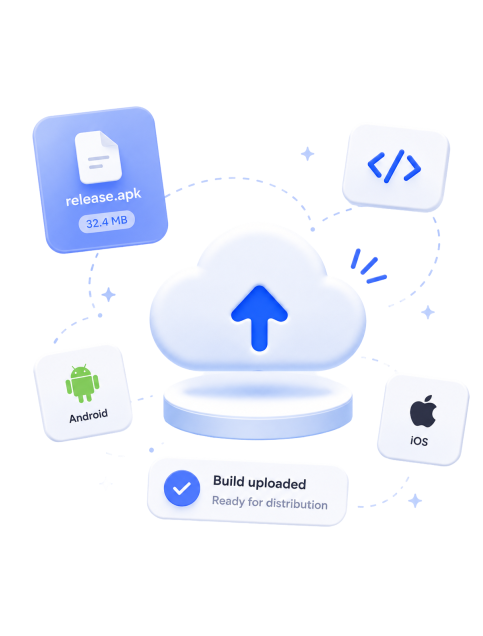
With AppsOnAir, teams can distribute Android and iOS app builds over the air, making it easier for testers, clients, and stakeholders to access the latest version. This supports faster feedback and smoother release preparation.
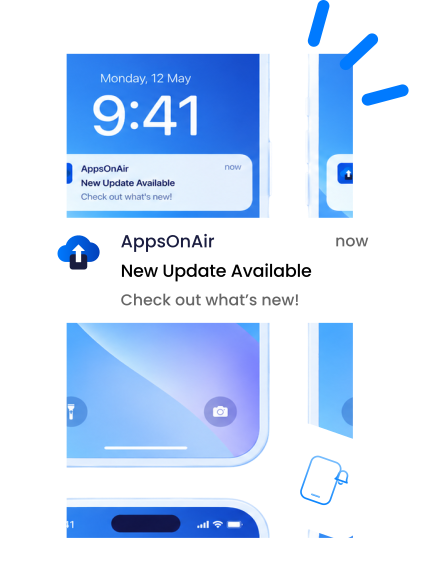
AppsOnAir also helps with update management through tools like AppSync, which allows teams to manage forced updates, optional updates, and maintenance messages remotely.
For React Native teams, AppsOnAir CodePush supports over-the-air updates for JavaScript bundles and assets, helping teams deliver certain improvements faster without waiting for a full app store release.
This makes AppsOnAir valuable for teams that want to improve mobile app delivery, reduce release friction, and create better user experiences.
Common Mistakes That Slow Down Cloud-First Applications
Even with modern cloud infrastructure, many apps still struggle with performance because of avoidable mistakes.
One common mistake is optimizing too late. Performance should be considered from the beginning, not after users complain.
Another mistake is relying only on more cloud resources. Adding more servers may help temporarily, but it does not fix poor code, slow queries, heavy pages, or inefficient architecture.
Many teams also ignore mobile users. An app may feel fast on a developer’s high-speed connection but perform poorly for users on slower networks.
Third-party tools can also create problems. Too many analytics scripts, plugins, ads, or external services can slow down an app and create hidden performance issues.
The best teams treat performance as an ongoing responsibility.
How to Improve Application Performance in 2026
Improving application performance starts with understanding the user journey.
Where do users experience delays? Which pages load slowly? Which APIs take too long? Where do errors happen? Which devices or regions face the most issues?
Once teams understand these patterns, they can prioritize improvements that create the biggest impact.
They can simplify frontend experiences, optimize APIs, improve databases, use caching, configure cloud resources properly, monitor real users, and test performance before every major release.
Most importantly, teams should make performance part of their culture.
A fast app is not created by one optimization task. It is created by consistent decisions across design, development, testing, deployment, and monitoring.
The Future of Application Performance in a Cloud-First World
The future of application performance will be shaped by automation, edge computing, AI-driven monitoring, and more user-focused development.
Applications will become more adaptive. Cloud systems will become better at scaling automatically. Monitoring tools will become smarter at detecting issues before they become serious. Edge computing will help reduce latency by bringing services closer to users.
At the same time, users will continue to expect faster and smoother experiences.
Businesses that invest in performance will have a major advantage. They will be able to launch faster, scale better, reduce costs, and build stronger relationships with users.
In 2026 and beyond, application performance will not just be a technical measurement. It will be a competitive advantage.
FAQs About Application Performance Optimization
What is application performance optimization?
Application performance optimization is the process of improving an app’s speed, reliability, scalability, and efficiency. It helps applications load faster, respond smoothly, handle more users, and deliver a better user experience.
Why is application performance important in a cloud-first world?
Application performance is important because cloud-first apps need to support users across devices, locations, and traffic levels. Good performance improves user experience, retention, conversions, and business growth.
How can cloud computing improve app performance?
Cloud computing can improve app performance by offering scalable infrastructure, global regions, managed services, content delivery networks, automation, and monitoring tools. However, apps still need to be designed and optimized properly.
What causes poor application performance?
Poor application performance can be caused by heavy frontend pages, slow APIs, inefficient databases, poor cloud configuration, network latency, too many third-party scripts, or lack of monitoring.
How do you build scalable applications?
Scalable applications are built with flexible architecture, efficient databases, caching, monitoring, auto-scaling, and cloud resources that can grow with demand.
How does AppsOnAir support mobile app performance?
AppsOnAir supports mobile teams by simplifying app distribution, update management, and release workflows. Faster testing and smoother delivery help teams improve mobile app experiences more efficiently.
Final Thoughts
Optimizing application performance in a cloud-first world is no longer optional. It is essential for businesses that want to build faster, smarter, and more scalable apps.
Cloud technology gives teams the flexibility to grow, release faster, and serve users globally. But the real value comes when applications are designed and optimized for speed, reliability, and continuous improvement.
A high-performing application creates better user experiences, stronger customer trust, lower support pressure, and better business outcomes.
As digital expectations continue to rise in 2026, businesses that focus on performance will stand out. They will build apps that are not only faster, but also smarter, more scalable, and ready for the future.
AppsOnAir supports this future by helping mobile teams simplify app delivery, manage updates, and improve release workflows—making it easier to deliver better mobile experiences in a cloud-first world.