.svg)



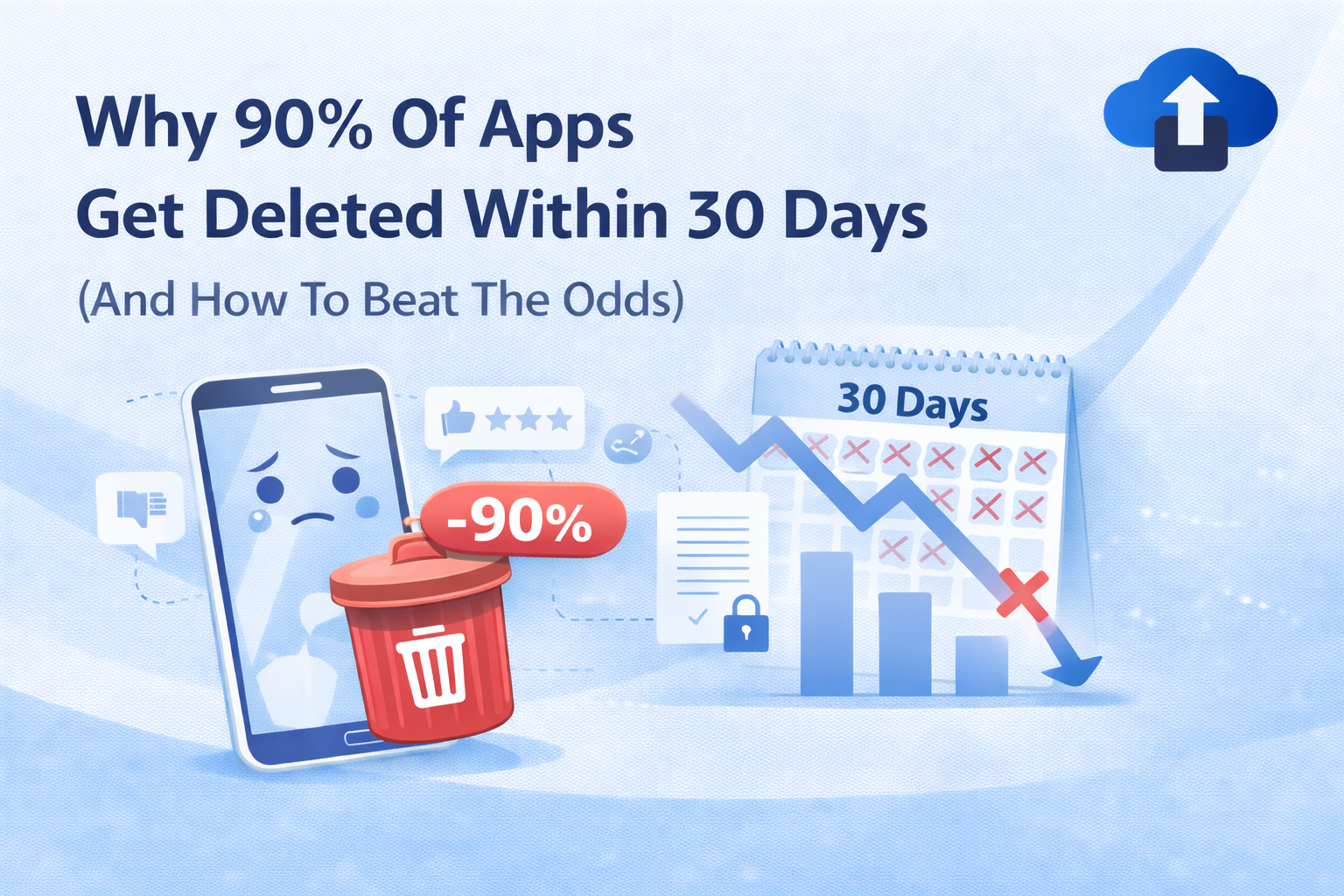
You spent months building your app. You launched it. People downloaded it. And then they deleted it. If this sounds familiar, you are not alone. Studies consistently show that nearly 90% of apps are deleted within the first 30 days of installation. That is a brutal number, but it is not a hopeless one. In this blog, we break down exactly why users uninstall apps so quickly and, more importantly, what you can do to make your app one of the 10% that sticks around.
The 30-Day App Deletion Problem: What the Numbers Say
The mobile app market is more competitive than ever. With over 5 million apps across the Apple App Store and Google Play combined, the average user keeps only a handful in regular use. The data tells a clear story:
• 25% of apps are used only once after being downloaded.
• By Day 7, over 70% of users have already stopped engaging with a new app.
• By Day 30, that number climbs to nearly 90%.
• Only 32% of users return to an app the day after first use.
These are not just statistics. They represent real users who gave your app a chance and walked away. The question is: why?
Top Reasons Users Delete Apps Within 30 Days
Poor Onboarding Experience
First impressions matter more in apps than almost anywhere else. If a user opens your app and does not immediately understand what to do or how to get value from it, they will close it and move on. Users should feel the value of your app within the first 60 seconds. Too many permissions upfront, confusing sign-up flows, or zero guidance on core features are all quick paths to uninstall.
App Performance Issues
Speed matters. A lot. According to Google, 53% of mobile users will abandon an app if it takes longer than 3 seconds to load. Frequent crashes, excessive battery drain, and high data usage are equally damaging to retention.
Too Many Notifications
Push notifications are a powerful retention tool when used correctly. But when overused, they become one of the fastest paths to the uninstall button. Irrelevant, too frequent, or intrusive notifications drive users away fast. The key is personalization and timing.
Lack of Perceived Value and Poor UI/UX
If users cannot clearly see why your app is better than an alternative, they will delete it. Value must be obvious, immediate, and recurring. Similarly, poor navigation, cluttered screens, and inconsistent design patterns frustrate users quickly. When they cannot figure out how to do something, they do not look for a tutorial. They look for the delete button.
No Habit Loop Created
The most successful apps create habits. If your app does not give users a reason to return daily or weekly, it will gradually fade from memory and eventually get deleted to free up space.
How To Beat the Odds: Strategies To Improve App Retention
1. Nail Your Onboarding Flow
Your onboarding should be short, focused, and value-driven. Show users the core value in the first screen, keep sign-up to the minimum required fields, use interactive tutorials instead of static instructions, and allow users to explore before committing to registration. Apps like Duolingo and Headspace are excellent examples of onboarding done right. They get users to their first success moment within minutes.
2. Beta Test Before You Launch
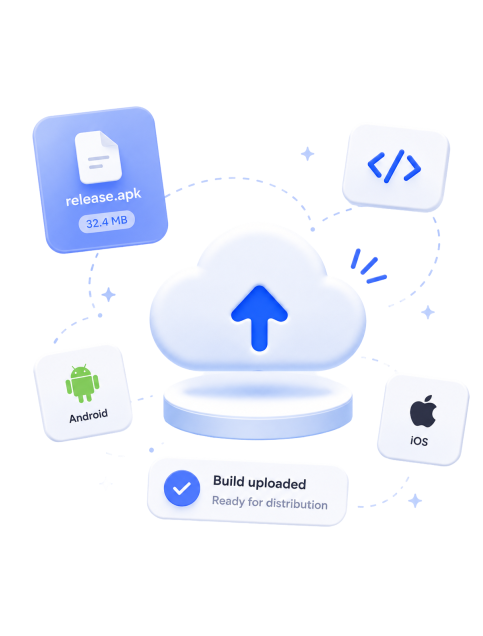
If there is one investment that pays off directly in retention, it is pre-launch beta testing. When you release your app to a controlled group of real users before going public, you get honest feedback, bug reports across a variety of devices and OS versions, insights into which features are loved or ignored, and a chance to fix onboarding issues before they affect thousands of users. Using a platform like AppsOnAir, you can distribute your build to testers with a single link, manage multiple app versions, collect in-app feedback, and track tester activity, all without going through the public app store. By the time your app reaches the public, the roughest edges are already smoothed out.
3. Optimize App Performance Continuously
Performance optimization should never stop after launch. Set up monitoring for crash rates, load times, and ANR errors using tools like Firebase Crashlytics or Sentry. Regular updates that fix bugs and improve speed signal to users that your team cares about their experience, which builds trust and loyalty over time.
4. Use Smart, Personalized Push Notifications
Segment your audience and personalize your messaging. Send notifications based on user behavior, limit frequency, make every notification feel relevant and useful, and let users set their own notification preferences. The goal is to make each notification feel like it was sent just for them.
5. Build In-App Engagement Loops
The best apps create behavioral loops that keep users coming back. Think daily check-ins, progress tracking, social features like leaderboards, gamification elements like badges and rewards, and personalized content that gets better the more they use the app. When using your app becomes a habit, uninstallation becomes much less likely.
6. Listen to User Feedback Actively
Users who feel heard are much more likely to stick around. Set up in-app feedback forms, respond to app store reviews promptly, and use tools that allow testers to submit detailed feedback with screenshots and video recordings. AppsOnAir provides a streamlined channel for beta testers to submit feedback directly through the platform, making it simple to identify pain points before they become mass deletion events.
Key Metrics To Track For App Retention
You cannot improve what you do not measure. Every app team should be tracking:
- Day 1, Day 7, and Day 30 Retention Rates
- DAU vs MAU ratio — how sticky your app truly is
- Session Length and Frequency
- Churn Rate — the rate at which users stop using or uninstall your app
Set benchmarks for each of these, monitor them weekly, and tie any changes you make back to movement in these numbers.
Retention Is a Product Problem, Not Just a Marketing Problem
The 90% deletion rate is a sobering statistic, but it is not a death sentence for your app. It is a signal that most apps are not meeting user expectations well enough to earn a permanent place on their phones. The good news is that retention is something you can directly influence through better onboarding, more rigorous testing, smarter notifications, and a genuine commitment to listening to your users.
The apps that beat the 30-day mark are not necessarily the most feature-rich. They solve a real problem clearly and quickly, invest in the first-use experience, treat feedback as a gift, test before they ship, and update consistently. There is no magic formula, but there is a clear pattern: they put the user experience at the center of every decision.
If you want to give your app the best possible chance, start by testing it properly before it goes live. Use AppsOnAir to distribute your app to beta testers, collect real feedback, and fix problems before they cost you real users. Because the goal is not just to get downloaded. The goal is to be the app they cannot imagine deleting.