.svg)



Think about the last app you deleted without a second thought. Chances are, it was not because the design was outdated or a feature was missing. Something just felt off. You did not fully trust it.
Now think about the apps still living on your phone. The ones you open every day without thinking twice. They probably have one thing in common: you know exactly what they do, why they do it, and what you are getting in return. That sense of clarity is not accidental. It is the result of transparency, and it is quietly one of the most powerful growth levers any app team can use.
In a market where users have endless alternatives and shrinking patience, transparency is no longer a nice-to-have. It is the foundation of sustainable app growth.
What Transparency Actually Means For App Teams
Transparency in app development goes well beyond a long privacy policy that nobody reads. It shows up in how you communicate with users, how you handle their data, how honestly you represent your product, and how openly you respond when things go wrong.
It Is Not Just About Privacy Compliance
Yes, being clear about data usage matters enormously, especially with growing user awareness around digital privacy. But transparency runs deeper than compliance checkboxes. It shows up in how you write your app store description, how you handle an outage, how you explain a pricing change, and how you respond to a frustrated one-star review.
It Is A Relationship, Not A Document
Users today have seen it all. They have been burned by apps that overpromised, quietly changed their terms, or disappeared the moment something went wrong. When an app team communicates openly and consistently, it builds the kind of relationship where users give you the benefit of the doubt instead of jumping ship at the first sign of trouble. That goodwill is genuinely hard to put a price on.
Why Users Delete Apps They Cannot Trust
The Damage Done By Overpromising
One of the most common retention killers is the gap between what an app promises in its store listing and what it actually delivers. When users see language like "completely free" and hit a paywall on day two, or read "no ads" and immediately encounter a banner, the trust is gone. That feeling of being misled is almost impossible to recover from, and the review they leave on the way out reaches thousands of potential users before your team even notices it.
Notification Manipulation Backfires Every Time
Sending misleading push notifications to drive opens is a short-term trick with long-term consequences. Users notice when they are being manipulated, and once they do, they do not just disable your notifications. They uninstall the app and write a detailed review explaining exactly what you did.
Going Silent During Problems Is The Worst Move
Every app has bugs. Every app has bad days. The teams that handle problems poorly go quiet and hope users do not notice. The teams that handle them well communicate early, explain what happened honestly, and share a clear plan to fix it. Users will forgive a bug far more easily than they will forgive feeling ignored.
Transparency During Beta Testing: Where Trust Is Built First
Be Upfront About What Is Ready And What Is Not
Beta users understand that things break. What they do not appreciate is discovering that a feature was marketed as working when it clearly was not. Set clear expectations from the start. Tell testers which parts of the app are stable, which are experimental, and exactly what kind of feedback you are looking for.
Send Regular Updates, Even Short Ones
One of the most common beta mistakes is going quiet between releases. A weekly update does not need to be a long report. Even a short message saying "we reviewed last week's feedback and here is what is changing" is enough to make testers feel respected. When people feel heard, they stay engaged. When they feel ignored, they quietly disappear.
What Every Good Beta Update Should Include
• What feedback was received and what was acted on
• What bugs were fixed and which are still being worked on
• What features are coming in the next build
• What you specifically need testers to focus on next
The Right Tools Make Transparency Easier
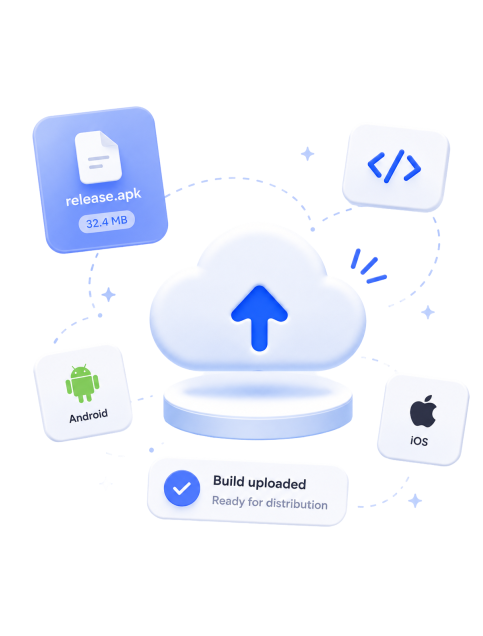
Platforms like AppsOnAir are built to support this kind of open, organized beta process. You can distribute builds to testers, collect structured feedback with screenshots and screen recordings, share detailed release notes with every update, and give testers a clear view of what version they are on and what has changed. When your beta process is communicative and organized, testers become advocates. When it is disorganized and silent, they become your most vocal critics.
How Transparency Directly Impacts SEO And Organic Discovery
Accurate Store Listings Attract The Right Users
When your app store description honestly describes what your app does, the users who download it are the ones most likely to get real value from it. Better user fit produces higher engagement rates, better ratings, and lower churn. All of these signals feed back into app store algorithms and improve your organic ranking over time. Misleading store copy might spike your installs temporarily. Honest copy builds your ranking sustainably.
Transparent Review Responses Build Credibility Publicly
Responding to negative reviews with honesty rather than defensiveness is one of the most underrated growth tactics available to app teams. When a potential user reads a critical review and sees a thoughtful, transparent developer response underneath it, that builds more trust than a hundred five-star ratings ever could.
What A Transparent Review Response Looks Like
• Acknowledge the exact issue the user raised, without minimizing it
• Explain what caused the problem honestly, without making excuses
• Share what you have done or are actively doing to fix it
• Invite the user to reach out directly if the issue persists
Publishing Content That Reflects Your Real Journey Builds Authority
Blogs, changelogs, and public roadmaps that document your product journey honestly build topical authority over time. When you write about real challenges, real lessons, and real product decisions, you attract an audience that respects honesty. That audience is far more likely to convert, stay, and refer others than users who found you through a misleading ad.
Practical Ways To Build Transparency Into Your Growth Strategy
Publish A Clear And Consistent Changelog
A changelog is one of the simplest transparency tools available, and most teams either skip it or write it in developer language that means nothing to regular users. Every time you release an update, write a plain-language summary of what changed and why it matters to the user. Users who see consistent changelogs feel confident the product is actively maintained and that their feedback is genuinely being heard.
Make Your Feedback Channel Visible And Easy To Use
Whether it is an in-app feedback form, a community forum, or a dedicated support email, having a visible channel where users can reach your team signals that you are open to hearing from them. The channel does not need to be complex. It just needs to exist, be clearly visible, and actually be monitored by someone who can act on what comes in.
Be Upfront About Pricing And Permissions
Unexpected charges and unexplained permission requests are among the top reasons users leave negative reviews and request refunds. Be completely upfront about what your app costs, what the free tier includes, what the paid tier adds, and why you need each permission you request. Users are far more willing to pay for features and share their data when they genuinely understand the reason behind the ask.
Share A High-Level Product Roadmap
You do not need to publish every item on your internal backlog. But sharing a broad view of where your product is heading builds excitement and trust at the same time. It also invites the kind of community feedback that helps you prioritize the right things. When users feel like they have a say in the direction of your product, they stop being passive consumers and start becoming invested stakeholders.
The Long Game: Why Transparency Compounds Over Time
Trust Is Your Most Defensible Competitive Advantage
Features can be copied. Designs can be replicated. Pricing can be matched overnight. But a reputation for honesty built over months and years is almost impossible for a competitor to fake quickly. Users who trust you stay longer, spend more, refer others, and forgive your mistakes instead of publicizing them. That combination is the definition of sustainable growth.
The Teams That Win Are The Ones Who Communicate
Look at the apps with the most loyal user bases and you will consistently find teams that over-communicate rather than under-communicate. They share their thinking. They admit when something did not work. They celebrate the small wins publicly. They make users feel like they are on the inside rather than on the outside looking in. That culture of openness does not just attract users. It attracts great team members, partners, and investors too.
Final Thoughts: Transparency Is Not A Strategy. It Is A Standard
The 90 percent of apps that get deleted within 30 days are not all bad products. Many of them are decent apps built by talented teams. What they lack is the trust of their users, and without that, nothing else really works.
The apps that grow sustainably are the ones that treat transparency as a baseline expectation, not a competitive differentiator. They communicate openly during beta. They respond honestly to feedback. They represent themselves accurately in the market. And they keep showing up for their users long after the launch excitement fades.
If you want to build an app that earns lasting loyalty, start with how you test it. AppsOnAir helps you run a beta process that is organized, communicative, and built around real user feedback. Give your testers clarity, give them a voice, and watch them become the community your product grows on.