.svg)



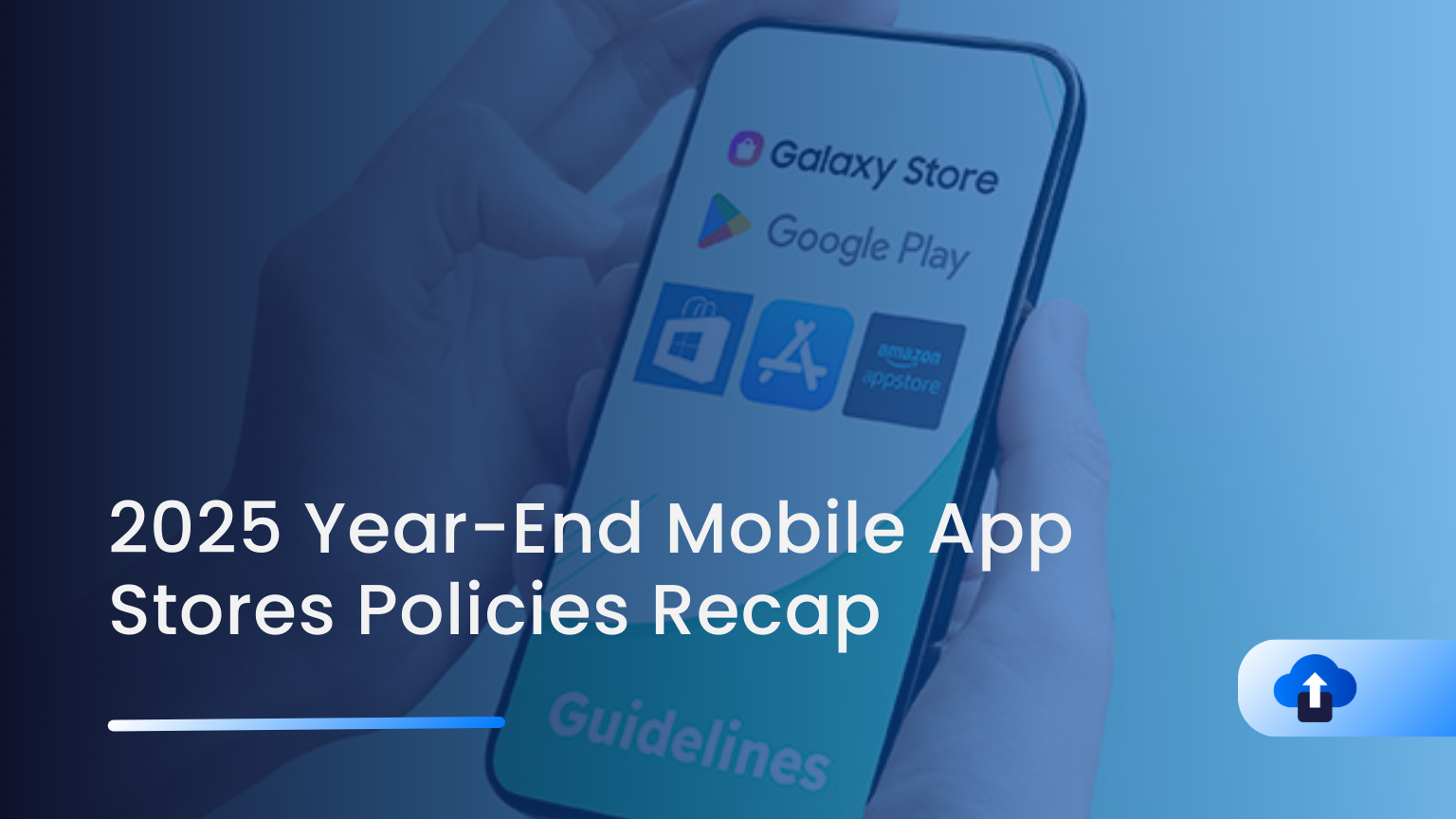
As 2025 comes to a close, mobile app policies across the Apple App Store and Google Play Store have continued to evolve, impacting app submissions, updates, payments, privacy, and long-term maintenance.
Below is a concise year-end recap of the most important policy changes, timelines, and developer takeaways, along with official reference links for deeper review.
2025 at a Glance
- Apple strengthened privacy enforcement and updated App Review Guidelines
- Payment and external link rules expanded due to U.S. and global regulations
- Google Play enforced Android 15 (API 35) and Billing Library v7
- New child safety and age-restricted content policies were introduced
- App quality, SDK compliance, and transparency received increased scrutiny
Apple App Store - Key updates (2025)
1. App Review Guidelines Updates
- External payment links allowed (U.S. only): Apps on the United States App Store can now include buttons, links, or calls to action that send users to external payment pages or checkout systems without prohibition even for in-app digital goods. This stemmed from a legal ruling and is reflected in updated guideline language around 3.1.1 and 3.1.3.
Official Apple revised guidelines (May 1, 2025) - Privacy & data sharing clarity: The November 2025 update added clearer requirements for disclosing when personal data is shared with third parties, including AI and external services, and obtaining explicit permissions. Apple Review Guidelines update (Nov. 2025)
Official guideline source: Apple’s App Store Review Guidelines page remains the authority for specific sections and detailed requirements.
2. Privacy & Data Transparency
Apps must clearly disclose:
- What data is collected
- How it’s used
- Which third-party SDKs access user data
- Mismatch between behavior and disclosure now leads to higher rejection risk.
3. Payments & External Links (Regulatory Changes)
Due to legal and regulatory updates (U.S., EU, and other regions), Apple expanded rules around external payment links and calls to action, with region-specific requirements.
Google Play Store - Key updates (2025)
- Target API Level Requirement
- By August 31, 2025: New apps and updates must target Android 15 (API level 35). Existing apps must meet minimum target levels to remain discoverable.
- Google Play Billing Updates
- Apps using in-app purchases must adopt Google Play Billing Library v7 or higher, ensuring improved security and user transparency.
- Child Safety & Age-Restricted Content
- Dating or matchmaking features
- Real-money contests or sensitive content
- Apps must properly block minors and declare age-restricted functionality.
- Android — 16 KB Memory Page Size Support
Android introduced 16 KB memory page size support to improve performance and memory efficiency.
Apps using native libraries (NDK / .so files) should ensure compatibility before targeting Android 15 (API 35) and above.
Key Takeaways for Developers
- Keep SDKs, APIs, and dependencies up to date.
- Ensure privacy disclosures match real app behavior.
- Review billing, subscriptions, and consent flows carefully.
- Maintain regular app updates to avoid store visibility risks.
Apple Major Deprecated Service (2025)
UIWebView: Fully removed from App Store submissions; apps must use WKWebView for web content rendering.
Legacy APNs APIs: Older push notification interfaces are no longer supported; servers must use APNs HTTP/2.
SKAdNetwork v1–v3 : Older ad attribution versions provide limited data; Apple now recommends SKAdNetwork v4+.
Google Major Deprecated Service (2025)
Firebase Dynamic Links: Deprecated by Google; apps must migrate to alternative deep linking solutions.
SafetyNet Attestation API: Deprecated in favor of the Play Integrity API for app and device integrity checks.
Google Play Billing Library ≤ v5: Older billing versions are blocked; apps must upgrade to Billing Library v7+.
Low Target API Levels: Apps targeting outdated Android versions risk removal; Android 15 (API 35) is required for new updates by Aug 31, 2025.
Staying informed about policy changes helps avoid rejections, delays, and unexpected compliance issues. As we move into 2026, proactive preparation will make app releases smoother and more predictable.