.svg)



Problem Statement
With increasing privacy regulations worldwide starting with the EU’s GDPR and expanding into laws like CCPA (California), LGPD (Brazil), and India’s DPDP Bill — mobile developers must embed data privacy into app design.
This article bridges legal requirements with practical implementation patterns for Android, iOS, and cross-platform apps.
Why GDPR Matters for Mobile Developers
As a developer:
- You collect user data (analytics, identifiers, photos, location, contacts)
- You might send data to cloud services
- You integrate third-party SDKs (ads, analytics, crash reporting)
Without GDPR compliance:
- Heavy fines (up to €20M or 4% of global revenue)
- App store rejection
- Loss of user trust
GDPR is not just a legal checkbox it’s an engineering discipline.
Core GDPR Principles for Developers
Practical Implementation Checklist
1. Review Your Data Flows
Map:
- What data you collect
- Where it goes (backend, analytics)
- Who accesses it
Tools: Flowcharts, Data Inventory Spreadsheets
2. Explicit Consent Dialogs
GDPR requires explicit consent before any personal data is collected
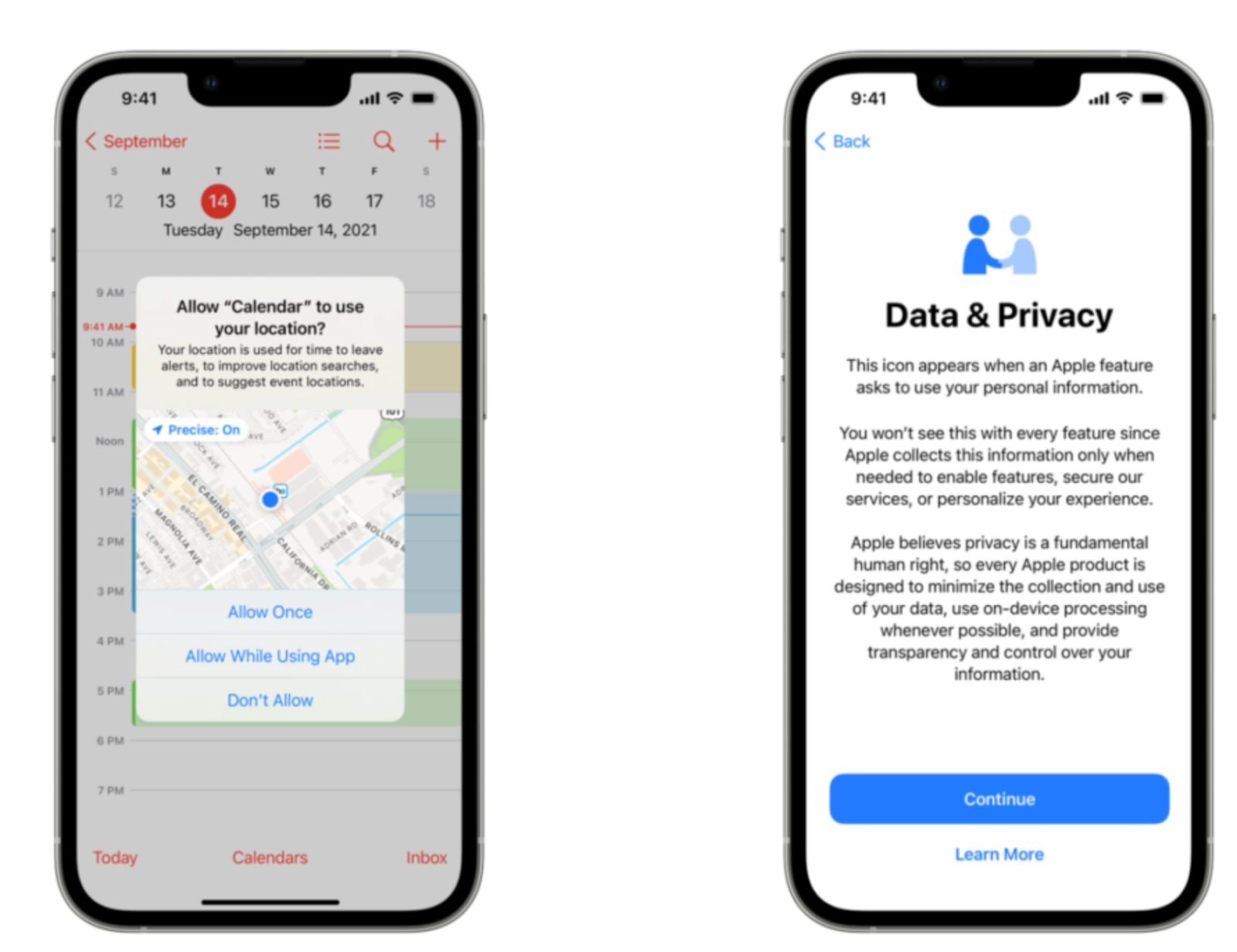
Example consent snippet (Flutter):
showDialog(
  context: context,
  builder: (_) => AlertDialog(
    title: Text("Allow Data Collection?"),
    content: Text("We use analytics to improve the app. Do you agree?"),
    actions: [
      TextButton(onPressed: () => decline(), child: Text("No")),
      TextButton(onPressed: () => accept(), child: Text("Yes")),
    ],
  ),
);
Key points:
- Consent must be opt-in
- Cannot be bundled with terms
- Provide granular choices (ads, analytics, personalization etc)
3. Privacy Policy in App & Website
Your privacy policy must Include:
- Data collected
- How it’s used
- Third-parties involved
- User rights & contact info
Reference tools:
Always link the policy from your app settings, onboarding, and app store listing.
4. User Rights Implementation
5. Minimal Data Collection
Only store what the app needs:
- Avoid sending PII unless required
- Anonymize analytics (remove identifiers)
- Use ephemeral session keys
6. Security Best practices
Common Pitfalls
- Pre-checked consent boxes — Not valid under GDPR.
- Long unreadable privacy policies — Write clear & concise.
- Sending analytics before consent — Must delay event logging.
- Third-party SDKs without review — Many leak data.
Real-world lesson: A popular analytics SDK once collected device IDs and sent them before consent — leading to regulatory investigations. Always initialize SDKs after consent.
Beyond GDPR: Global Data Laws
The world’s strictest data privacy law. It gives users strong rights over their personal data and requires clear consent, transparency, and breach reporting. Applies globally if you handle EU user data.
🇪🇺 EU – GDPR (General Data Protection Regulation)
The world’s strictest data privacy law. It gives users strong rights over their personal data and requires clear consent, transparency, and breach reporting. Applies globally if you handle EU user data.
🇺🇸 USA (California) – CCPA / CPRA
California’s privacy laws give users the right to know, delete, and opt out of the sale of their data. CPRA strengthens enforcement and introduces stricter rules for sensitive personal data.
🇧🇷 Brazil – LGPD (Lei Geral de Proteção de Dados)
Similar to GDPR, LGPD regulates how companies collect, process, and store personal data in Brazil, focusing on user consent, purpose limitation, and data security.
🇮🇳 India – DPDP Act (Digital Personal Data Protection Act)
India’s data privacy framework focuses on consent-based data usage, user rights, and penalties for misuse. Implementation is ongoing, and rules will roll out in phases.
Tools to Help Compliance
The right tools can simplify compliance by managing consent, tracking data usage, and securing user information across your app.
- OneTrust — Consent management platform (CMP)
- Usercentrics — GDPR & global consent orchestration
- Termly / Iubenda — Policy generators
Key Takeaways
Data privacy is no longer optional for modern apps. Regulations like GDPR have set a global standard, shaping how developers collect, process, and protect user data. These key takeaways highlight what every app team must get right.
- GDPR compliance is essential for user trust and legal safety
- Consent must be explicit, granular, and revocable
- Embed data privacy as part of your app’s architecture, not as an afterthought
- Always audit third-party SDKs
- Prepare for global privacy laws beyond GDPR
Conclusion
GDPR compliance is no longer optional for mobile apps. By collecting minimal data, taking clear user consent, and securing data properly, developers can stay compliant while building user trust. Privacy-first apps scale better and face fewer legal and store risks.
References (Latest & Working)
- GDPR official guide
- GDPR principles
- Privacy notice guidelines
- CCPA overview
- GDPR Google Reference
- Apple Guide lines, Protecting Users’s Privacy
- Free Privacy Policy generator