.png)


.png)
Let's be honest 2025 wasn't just another year of incremental updates and minor SDK bumps. This was the year mobile development grew up.
Apple threw out a decade of design language overnight. Google finally figured out how to ship Android updates on time. React Native said goodbye to the bridge that defined it for a decade. And suddenly, everyone's talking about running AI models on the device no cloud, no API costs, no privacy concerns.
Whether you ship apps for a living or you're just trying to keep up with the ecosystem, buckle up. Here's everything that mattered in 2025.
Android: Google Finally Gets It Right
For years, Android updates followed a predictable (and frustrating) pattern: Google announces the new version in September, Pixel users get it immediately, and everyone else waits months sometimes until the next version is announced. In 2025, Google broke the cycle.
The Big Shift: Android 16 in June
Android 16 dropped in early June a full three months ahead of the traditional schedule. Why does this matter? Because now Samsung, OnePlus, and other OEMs actually have time to integrate the new OS before their fall flagship launches. No more buying a $1,200 phone in October that ships with "last year's" Android.
But here's the real innovation: Google introduced a dual-cadence release model. Major releases in summer, minor releases in winter. Android 16 QPR2, which landed in December, was the first to use a minor SDK version meaning new APIs without the usual behavior changes that break apps. It's the kind of boring-but-brilliant infrastructure work that makes developers' lives easier.
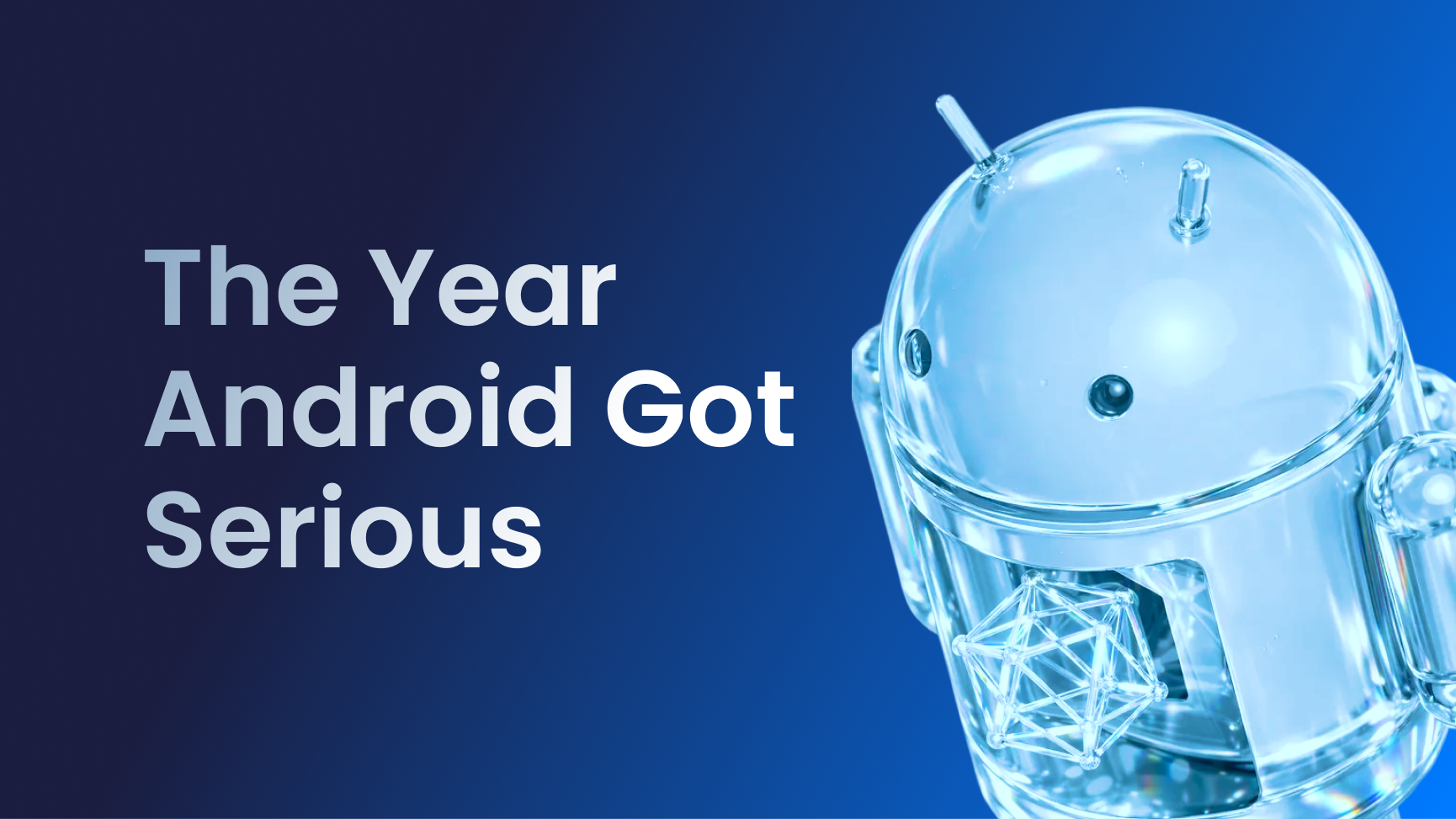
Material 3 Expressive (a.k.a. Android's Liquid Glass Response)
When Apple announced Liquid Glass at WWDC, Android fans collectively wondered: "What's Google's answer?" Material 3 Expressive is that answer deeper color theming, springier animations, and a visual language that finally feels cohesive across the entire OS. It's not as dramatic as Apple's overhaul, but it doesn't need to be. Android has always been about evolution over revolution.
The Headline Grabbers
Quick Share now works with AirDrop. Read that again. After years of fragmented file sharing between ecosystems, you can now send files from your Pixel to your friend's iPhone. It requires Apple users to enable "Everyone for 10 minutes" mode, but still this is huge. Combined with last year's RCS victory, Google is systematically dismantling Apple's walled garden, one feature at a time.
Pixel 10 Pro Fold got IP68 rating the first foldable with full dust and water resistance. Dust has always been the Achilles heel of foldables, and Google just solved it. Expect Samsung and others to follow.
Scam detection expanded to WhatsApp and Signal. On-device AI now scans messages across third-party apps for suspicious patterns. Privacy advocates: it all happens locally, nothing leaves your phone.
What's Coming: Android XR and Aluminium OS
The groundwork for Android XR headsets is laid, with devices expected in 2026. And leaked documents hint at "Aluminium OS" a desktop-class operating system merging ChromeOS and Android. Google's been promising this convergence for years. Maybe 2026 is finally the year it happens.
iOS: The Liquid Glass Era Begins
Remember iOS 7? That flat design overhaul that everyone hated for about six months before accepting it as the new normal? iOS 26 is that moment again except this time, Apple went in the opposite direction.
Liquid Glass: Love It or Hate It
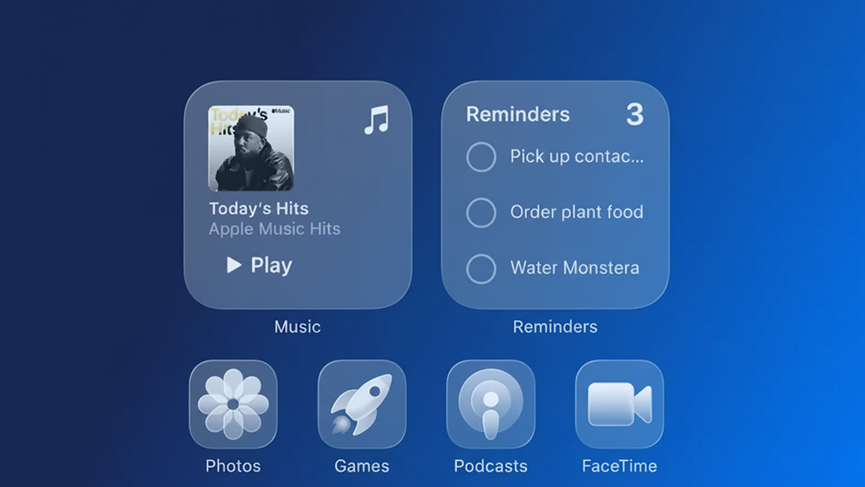
The new design language is called Liquid Glass, and it's... divisive. Translucent buttons, refractive UI elements, glass-like shimmer effects that respond to device movement. Early beta testers complained about legibility, and Apple spent several beta cycles adjusting transparency levels. The final result is beautiful, but it takes getting used to.
Here's what matters for developers: this isn't just a visual refresh. Apple redesigned how controls, toolbars, and navigation work. Tab bars now shrink when you scroll and expand when you scroll back up. Sidebars refract content behind them. It's ambitious, and if you're maintaining an iOS app, you've got homework to do.
Wait, Why iOS 26?
Apple skipped from iOS 18 to iOS 26. No, you didn't miss seven versions. Apple switched to year-based versioning to unify all their operating systems. iOS 26, macOS 26, watchOS 26, tvOS 26 everything's in sync now. It's confusing for about five minutes, then it makes perfect sense.
Foundation Models: Free On-Device AI for Developers
This is the sleeper hit of WWDC 2025. Apple opened up their ~3 billion parameter on-device AI model to all developers through the Foundation Models framework. The killer feature? Zero inference costs. No API calls, no cloud bills, no rate limits. Your users' data never leaves their device.
The @Generable macro lets you define structured outputs in pure Swift. Three lines of code, and you've got AI-powered text summarization, entity extraction, or content generation in your app. For indie developers especially, this changes everything features that would've cost hundreds in API fees are now free.
Xcode 26: AI Copilot Built In
Xcode now natively integrates with ChatGPT, Claude, and local models. It can pass your project files along, deeplink to specific lines, and scrub through change history. It's not just autocomplete it's a genuine AI assistant that understands your codebase. Also: compilation caching is here, and it's cutting build times by 30-40%. Finally.
The Small Things That Matter
Call Screening: When unknown numbers call, Siri asks for their name and purpose before connecting you. Simple, obvious, should've existed years ago.
Live Translation: Real-time translation in Messages, FaceTime, and Phone calls all processed on-device. Supports English, French, German, Spanish, Portuguese, Italian, Japanese, and Korean.
Apple Games: A dedicated gaming app that consolidates Apple Arcade and all your games in one place. Apple's taking gaming seriously.
React Native: The End of an Era (and the Start of a New One)
React Native turned 10 this year. And what a birthday present: after six years of development, the New Architecture migration is finally complete. The bridge that defined React Native and caused so many of its performance headaches is gone.
The Timeline of a Revolution
February (0.78): React 19 lands in React Native. The iOS template finally switches from Objective-C to Swift. Eleven years of Objective-C AppDelegate code, gone.
April (0.79): New Architecture becomes the default for new projects. The writing's on the wall.
June (0.80): Legacy Architecture enters code freeze. No more features, no more improvements just maintenance until removal.
October (0.82): The moment arrives. React Native 0.82 runs only on the New Architecture. Try to disable it, and the build fails. The bridge is officially dead.
December (0.83): Zero breaking changes. After a year of seismic shifts, the team delivers a rock-solid release. React 19.2, new Activity component, useEffectEvent API all smooth sailing.
Hermes V1: The Engine Gets an Upgrade
The JavaScript engine powering React Native got a major overhaul. Hermes V1 brings compiler and VM improvements that boost bundle loading and time-to-interactive. It's opt-in for now (available in 0.82), but expect it to become the default soon. Early benchmarks show meaningful gains, especially for larger apps.
Developer Experience Wins
Network Inspector: React Native DevTools now has a Network tab that looks and works like Chrome DevTools. Inspect fetch requests, XMLHttpRequest, images finally, proper network debugging without third-party tools.
DOM Node APIs: 50+ web-standard methods now work in React Native, including getBoundingClientRect(). Measure component layouts before they render. No more UI "jumps."
debugOptimized Mode: Native code runs optimized (like release mode), but JavaScript stays debuggable. Faster development for the 99% of developers who don't debug native code.
Expo: The 10x iOS Build Time Drop
Expo SDK 54 (August) shipped React Native as precompiled XCFrameworks for iOS. Clean builds that took 120 seconds now take 10 seconds on an M4 Max. That's not a typo it's a 10x improvement. SDK 54 also added Liquid Glass UI support and marked the final SDK to support the Legacy Architecture via interop layer.
The Companies Betting on React Native
Mistral, v0, Replit, vibecode some of the hottest AI startups chose React Native for their mobile apps. The framework's mature ecosystem and web-sharing capabilities make it perfect for AI-powered products that need to ship fast and iterate faster.
Flutter: Stability as a Feature
While React Native was busy burning down its architecture and Apple was reinventing its design language, Flutter took a different path: stability, performance, and steady progress. Four stable releases (3.29 through 3.38), 825 commits in 3.38 alone, and zero architectural upheaval.
Impeller: Jank Is Dead
Impeller became the default rendering engine on both iOS and Android. If you've ever seen that first-run stutter when Flutter compiles shaders? Gone. Impeller uses precompiled shaders, eliminating shader compilation jank entirely. Benchmarks show 30-50% reduction in jank frames during complex animations. Text rendering is smoother, blur effects are more efficient, and engine startup is faster.

Flutter 3.38: The November Release
Dart 3.10 and Dot Shorthand Syntax: Write .value instead of MyEnum.value when the type is known. Small change, big readability improvement.
Full iOS 26 Support: UIScene lifecycle migration, Liquid Glass compatibility, and all the Apple platform requirements handled.
Java 17 Required: Android builds now require Java 17 with Gradle 8.14 minimum. Update your CI/CD pipelines.
GenUI SDK: Build dynamic UI that adapts based on user intent using AI. Flutter's answer to the AI-powered app trend.
The Architecture Announcement
Here's the big news: Flutter announced plans to decouple Material and Cupertino libraries from the core framework. They'll become separate first-party packages with independent versioning. This means faster iterations on design components without waiting for full Flutter releases. It also means a lighter core for apps that don't need both design systems.
Web Hot Reload (Finally)
Web hot reload no longer requires an experimental flag. It just works. For teams doing Flutter web development, this is a game-changer for iteration speed.
Jaspr Migration
In a vote of confidence for Dart's web capabilities, the Flutter team migrated both dart.dev and docs.flutter.dev to Jaspr a Dart-based web framework. When Google uses community tools for their own docs, you know the ecosystem is maturing.
Kotlin Multiplatform: iOS Goes Stable
May 6, 2025. That's the date Kotlin Multiplatform became a serious cross-platform contender. JetBrains announced that Compose Multiplatform for iOS reached stable status with version 1.8.0. Not beta. Not experimental. Stable.
What This Actually Means
You can now build truly shared UI not just business logic across Android and iOS using Kotlin and Compose. The promise of "write once, run everywhere" that's been chased for decades? KMP is delivering on it, with native performance and without the compromises of web-based solutions.
Who's Using It in Production?
McDonald's global mobile app. Forbes (sharing 80%+ of code). Shopify. Philips HealthSuite. Zürcher Kantonalbank. These aren't experiments they're production apps serving millions of users. The "is KMP ready for production?" debate is over.
Kotlin 2.3.0 Highlights
Swift Export improvements: Kotlin enums now map directly to native Swift enums. Vararg functions work as Swift variadic parameters. The iOS interop story gets cleaner with every release.
Unused return value checker: The compiler now warns when you ignore a function's return value. Catches bugs before they happen.
Koog Framework: JetBrains' new Kotlin-native framework for building AI agents that run locally. AI is everywhere in 2025, and Kotlin wants in.
Google Goes All In
Following their Google I/O 2024 endorsement, Google expanded KMP support across Jetpack libraries in 2025:
Now stable: Room, DataStore, Collection
Newly added: ViewModel, SavedState, Paging
Experimental: Web/WASM support (they're exploring it)
Android Studio Meerkat includes a new KMP module template that makes adding shared code to existing Android apps trivial. The migration path from pure Android to cross-platform has never been smoother.
The Year AI Came to Your Device
If there's one trend that defined mobile development in 2025, it's this: AI moved from the cloud to the device. Not as a gimmick, not as a demo as production-ready infrastructure that changes how we build apps.
Why On-Device AI Matters
Privacy: User data never leaves the device. No privacy policies to navigate, no GDPR headaches, no data breach risks.
Cost: No API calls means no API bills. Apple's Foundation Models framework offers zero inference costs. That's not "cheap" that's free.
Latency: No network round-trips. Responses are instantaneous. For real-time features like live translation, this is essential.
Availability: Works offline. No internet? No problem. Your AI features still work.
Apple's Approach
Apple's ~3B parameter on-device model powers Apple Intelligence features across iOS 26. But the real story is the Foundation Models framework developers get direct access to that same model. Guided generation with the @Generable macro. Tool calling. Structured outputs. All running locally, all free.
For complex tasks that need more power, Private Cloud Compute offloads to Apple silicon servers with end-to-end encryption. Even Apple can't access the data it just processes requests and discards them.

Google's Approach
Google offers Gemini Nano via the AI Edge SDK, plus the open-weight Gemma 3n from DeepMind. The ML Kit Gen AI API brings local AI to Android developers without requiring ML expertise. It's more fragmented than Apple's unified approach hardware varies wildly across Android devices but the capability is there for developers who want it.
What Developers Are Building
Education apps generating personalized quizzes from user notes offline, free.
Outdoor apps with natural language search that works without cell service.
Real-time translation in messaging apps no third-party service required.
Content summarization and entity extraction built into productivity tools.
This is just the beginning. Hybrid architectures local model + vector memory + cloud fallback are becoming the new standard for AI-powered mobile apps.
What's Next: 2026 Preview
Android XR headsets are launching. Google's been laying groundwork all year, and the hardware is finally coming.
Aluminium OS the ChromeOS/Android merger is expected mid-2026. Desktop-class Android is coming.
React Native 1.0 is finally on the horizon. The stable JavaScript API initiative in 2025 set the stage.
Flutter's Material/Cupertino decoupling will ship, enabling faster design system iterations.
JetBrains' all-in-one KMP IDE is expected to reach public release, unifying Kotlin Multiplatform development.
Hybrid AI architectures will become standard local models, vector memory, and cloud fallback working together.
2025 was the year mobile development stopped feeling incremental. Design languages got reinvented. Architectures got replaced. AI moved from cloud to device. The platforms we build on are fundamentally different than they were twelve months ago.
For developers, that means opportunity. New APIs to explore. New patterns to learn. New features to ship that weren't possible before.
See you in 2026. It's going to be even wilder.
Happy coding!