.svg)



Every day, thousands of apps enter the marketplace filled with ambition. Most of them won’t survive long enough to gain traction. Behind every successful app on the charts is a long list of products that quietly disappeared.
The truth is simple: building an app is easy. Keeping it alive is hard.
Let’s break down why most apps fail and how the successful 20% manage to survive.
The Brutal Statistics: Understanding The App Mortality Rate
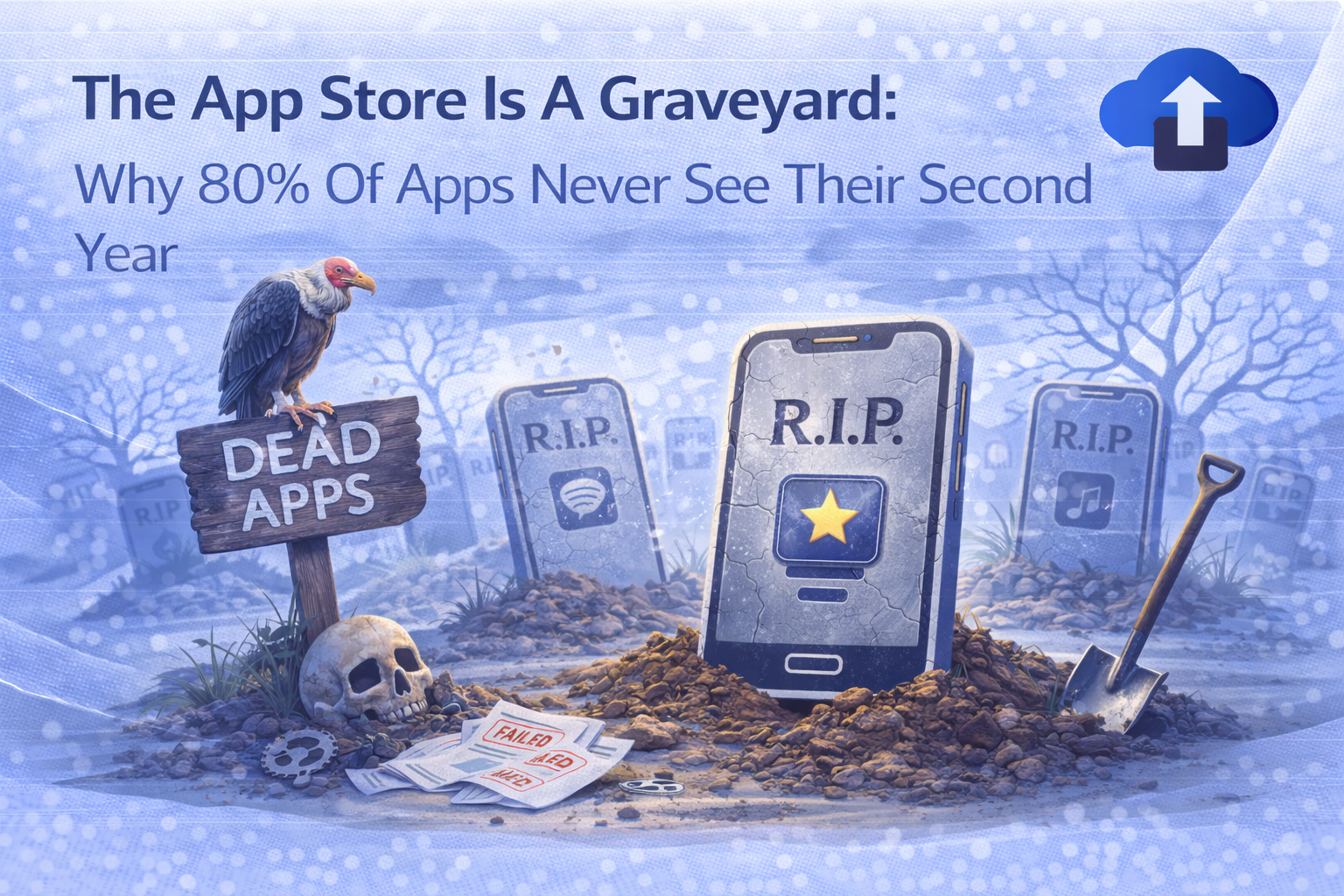
The mobile app ecosystem is more unforgiving than most founders expect. Nearly 80% of apps fail within two years, and many never recover after their first month.
A few hard realities define this market:
- A large portion of users abandon apps after just one use
- The majority of downloads go to a small percentage of top apps
- New apps are launched daily, increasing competition
This means success today is not about launching faster. It’s about building smarter.
The Discovery Death Trap: Why Nobody Finds Your App
Many apps don’t fail because they are bad. They fail because they are invisible.
Without proper optimization and promotion, your app gets buried under thousands of competitors. Weak store listings, unclear messaging, and the absence of external marketing channels make it nearly impossible to attract organic traffic.
If users can’t discover your app within seconds of searching or browsing, you don’t exist in their world.
The First Week Failure: When Users Download But Never Return
Your app’s future is often decided in the first few minutes.
Users uninstall quickly when they face slow performance, confusing onboarding, forced signups, or unclear value. If the app doesn’t deliver a clear benefit immediately, users move on without hesitation.
Successful apps design the first experience carefully. They remove friction, highlight core value, and make the first interaction simple and satisfying.
The Monetization Misstep: Can't Make Money, Can't Survive
Many promising apps die not because users dislike them, but because revenue never arrives.
Some teams delay monetization too long, while others overload users with ads or price their subscriptions incorrectly. Without a sustainable business model, server costs, marketing expenses, and development efforts quickly become unsupportable.
Monetization works best when it feels natural, fair, and aligned with the user experience.
The Maintenance Burden: When Keeping Apps Alive Becomes Unsustainable
Launching an app is only the beginning.
Operating system updates, device compatibility issues, bug fixes, and performance optimization require constant attention. Over time, neglected apps become slower, less secure, and less reliable.
When maintenance is ignored, user trust drops, ratings decline, and visibility in app stores suffers. Many teams underestimate this workload and burn out trying to keep up.
The Competition Crush: How Market Saturation Kills New Entrants
No matter your idea, chances are several similar apps already exist.
The market is crowded with lookalike products competing for the same audience. Without strong differentiation, apps struggle to attract attention or build loyalty.
The winners are not always the ones with the most features. They are the ones with the best experience, clearest positioning, and strongest brand identity.
The Survival Blueprint: What The 20% Do Differently
While most apps fade away, successful ones follow a different approach.
They focus deeply on solving real user problems instead of chasing trends. They invest in retention before scaling growth. They treat marketing as part of the product, not an afterthought.
Surviving apps also move fast. They ship updates regularly, improve performance, listen to feedback, and refine their experience continuously. Most importantly, they think long-term by building sustainable revenue models and scalable infrastructure.
Final Thoughts
The App Store may look full of opportunity, but it’s also filled with forgotten projects. Survival depends on strategy, user experience, consistency, and business planning.
At AppsOnAir, we believe apps should be built to last — not just launch. With the right foundation, your app doesn’t have to become another statistic. It can become a product users trust, return to, and recommend.