.png)


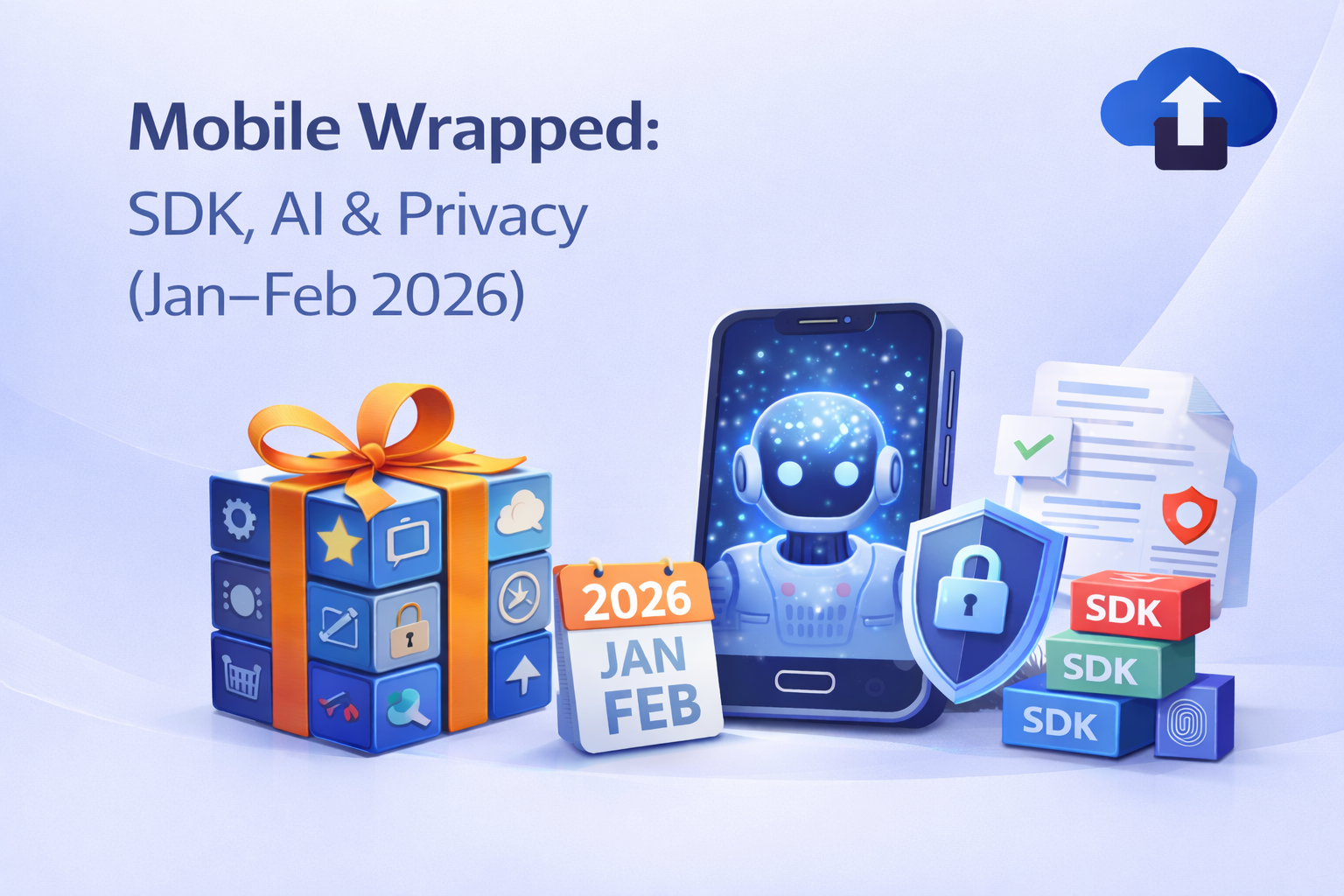
January and early February 2026 were not about UI polish or growth hacks. They were about platform control.
Apple raised SDK baselines. AI scrutiny intensified. Privacy enforcement tightened across both major stores. If you operate at the mobile platform layer — Flutter, native iOS, Android, DevOps, SDK distribution, or infra — this cycle mattered more than most feature releases.
This post breaks down what changed, why it matters technically, and what teams should be doing now.
The first two months of 2026 introduced three structural shifts:
- Mandatory SDK modernization in the Apple ecosystem
- AI moving from feature layer to infrastructure layer
- Store-level privacy and SDK enforcement becoming release blockers
This is not cosmetic policy noise.
These changes directly impact:
- CI/CD pipelines
- Binary frameworks and XCFramework distribution
- Flutter and React Native engine alignment
- Dependency trees (Firebase, AI SDKs, analytics)
- App Store and Play compliance posture
If your stack is not actively maintained, you are already accumulating technical and compliance debt.
Apple Ecosystem — SDK Baseline Enforcement
iOS 26 SDK Required for Submissions (Effective April 28, 2026)
Apple regularly publishes SDK enforcement updates and migration guidance via Developer News. Starting April 28, 2026, all submissions to App Store Connect must be built using:
- iOS 26 SDK
- iPadOS 26 SDK
- tvOS 26
- visionOS 26
- watchOS 26
This is enforced at submission level — not optional.
What Actually Changes (From an Engineering Perspective)
This is not “just upgrade Xcode.”
Compiling against a new SDK affects:
- Swift compiler strictness
- Concurrency enforcement (Sendable, @MainActor)
- Deprecated API hard failures
- Linker behavior for XCFrameworks
- Background task policies
- Push entitlement validations
Even if your deployment target stays at iOS 15 or 16, your compilation surface changes.
That’s the part many teams underestimate.
Who Gets Hit First
From production experience, these teams feel the pain immediately:
- Teams with frozen macOS CI runners
- Companies distributing binary-only internal frameworks
- Flutter apps tied to older engine builds
- React Native apps locked to specific iOS toolchains
- SDK vendors shipping prebuilt XCFrameworks
If your pipeline depends on a specific Xcode image, enforcement breaks your release flow.
What You Should Do Now
1. Upgrade CI before the deadline
Do not wait until the submission fails.
- Update macOS images
- Validate signing
- Rebuild archives
2. Rebuild all frameworks
Especially:
- Internal static libraries
- Prebuilt XCFrameworks
- Vendor SDK wrappers
3. Audit deprecated APIs
Run:
xcodebuild build -scheme YourApp -destination 'generic/platform=iOS'
Enable "Treat Warnings as Errors" in CI temporarily to surface risk early.
4. Regression test background flows
Focus on:
- Push notifications
- Background fetch
- URLSession background tasks
- App lifecycle under memory pressure
Apple is compressing modernization cycles again. This is intentional.
AI + Mobile — Infrastructure Layer Shift

AI is no longer a “feature tab.”
It is now part of release infrastructure.
1. App Review & AI Transparency
Apple is increasing scrutiny on:
- AI-generated content apps
- Model usage disclosure
- Third-party AI data transmission
- Privacy Nutrition Label alignment
If your app sends data to external AI services — even indirectly through SDKs — disclosure must match runtime behavior exactly.
Mismatch = rejection.
Vague marketing like “AI-powered” without explanation is increasingly flagged.
AI compliance is now part of release readiness.
2. Codex — AI Agents in the Dev Workflow
Codex is evolving beyond autocomplete into task-level coding agents.
Why this matters during SDK enforcement cycles:
Multi-file Refactoring
Handles deprecated API cleanup across large codebases with project-level awareness.
Dependency Alignment
Assists in updating:
- Gradle versions
- Swift dependencies
- iOS SDK migrations
CI-Assisted Automation
Generates tests and refactors inside review-gated workflows.
When SDK baselines shift faster, agent-assisted modernization becomes strategic — not optional.
3. Clobot — Edge Intelligence Signal
Clobot reflects the broader industry movement toward device-resident AI systems.
Why mobile teams should care:
- On-device inference is rising
- Privacy-first AI requires local processing
- Cloud-edge synchronization is becoming architectural default
This trend mirrors what we’re seeing in mobile apps, wearables, and spatial computing.
Edge is not experimental anymore.
Privacy Enforcement — Apple & Google Tighten the Surface
Apple — AI Disclosure & Privacy Alignment
Apple’s scrutiny includes:
- AI-generated content apps
- Third-party AI SDK usage
- Privacy Nutrition Label accuracy
- Metadata vs runtime behavior mismatch
If your app:
- Sends prompts to external APIs
- Uses AI moderation SDKs
- Logs AI analytics events
You must disclose it precisely in App Store metadata. Compliance is now audited against runtime behavior.
Google Play — SDK Accountability
Google Play continues enforcing:
- Accurate Data Safety declarations
- SDK-level transparency
- Abuse prevention integrity
- Minor protection compliance
Important shift: If an SDK collects data — your app collects data.
That means:
- Ads SDK behavior
- Analytics SDK behavior
- AI SDK telemetry
Must match Play Console declarations exactly. Dependency drift now equals compliance risk.
For detailed Data Safety requirements and SDK transparency rules, refer to the official Google Play Policy Center.
Best Practices & Trade-offs
1. Treat SDK Upgrades as Infrastructure Work
- Do not bundle SDK migrations with feature releases.
- Separate branches.
- Separate regression cycles.
2. Lock & Audit Your Dependency Tree
For Flutter teams especially:
flutter pub deps --style=treeAudit:
- AI SDKs
- Analytics
- Background services
Track compliance impact per dependency.
3. Automate Privacy Drift Detection
- Compare runtime network calls with declared data usage
- Log outbound AI service calls
- Maintain internal SDK data flow documentation
4. Shorten Modernization Cycles
If you upgrade once per year, you will feel pain. Quarterly alignment reduces blast radius.
Conclusion
January–February 2026 signaled a structural shift:
- SDK baselines are rising faster
- AI compliance is audited infrastructure
- SDK-level privacy responsibility is enforced
- Modernization cycles are compressing
The surface looks quiet.Underneath, platform control is tightening. For engineering teams, this is the moment to:
- Reassess CI pipelines
- Audit dependencies
- Align AI disclosures
- Upgrade toolchains proactively
In Feb 2026, compliance, SDK alignment, and AI transparency are no longer documentation tasks. They are architectural decisions.
Happy coding. 🚀