.png)


Imagine a user clicks on a promotional link for a product in your mobile app. Instead of seeing that product, they're taken to the App Store, install the app, open it for the first time—and land on the home screen. Now they have to search for the product again.
Most users won't.
This is one of the biggest challenges in mobile app marketing and user acquisition. Every extra step between installation and the intended destination increases the chances of users abandoning the journey.
Deferred deep linking solves this problem. It ensures that even if users don't have your app installed, they are guided to the exact content they originally clicked after the installation is complete.
In 2026, deferred deep linking has become an essential feature for mobile apps that rely on marketing campaigns, referrals, social sharing, and personalized user experiences. In this guide, we'll explain how deferred deep linking works, why it matters, and how it can improve conversions and user retention.
What Is Deferred Deep Linking?
Deferred deep linking is a type of deep linking that remembers where a user wanted to go before installing an app and automatically takes them to that destination after the app is installed and opened for the first time.
Unlike standard deep links, deferred deep links work even when the application is not already installed.
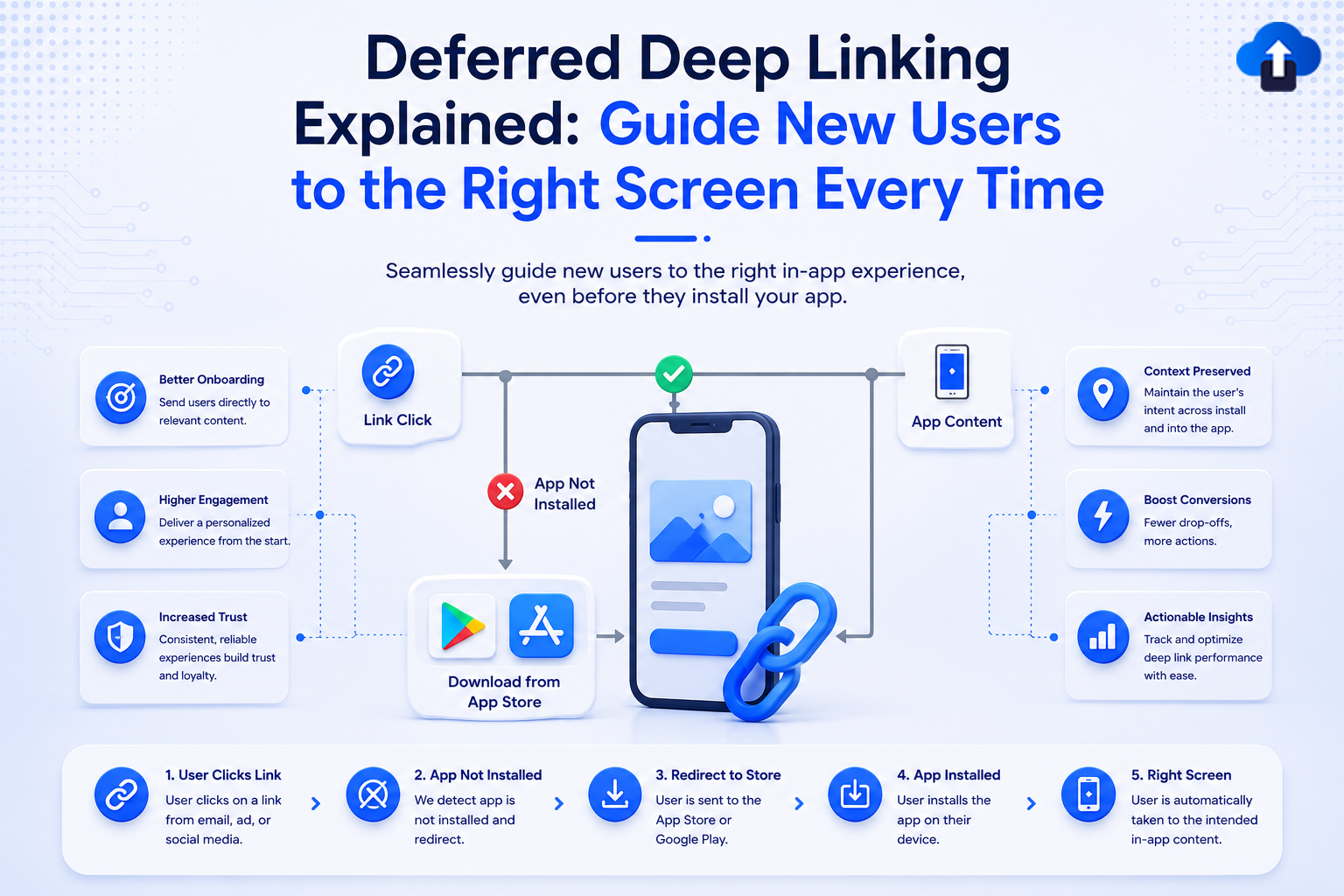
How Deferred Deep Linking Works
The process is straightforward:
- A user clicks a deep link.
- The system checks whether the app is installed.
- If the app is installed, it opens directly to the intended screen.
- If the app is not installed, the user is redirected to the App Store or Google Play.
- After installation and the first app launch, the user is automatically taken to the original destination.
This creates a seamless experience from the initial click to the desired in-app content.
Flow:
1. User clicks: https://go.appsonair.com/product/featured-xyz

2. App not installed → Redirected to App Store / Play Store

3. User installs & opens app for first time

4. Automatically opens → Product detail screen of "featured-xyz"
Deferred Deep Linking vs Standard Deep Linking
Standard deep links only work when the app is already installed.
If the app is missing, users usually end up on the app store and lose the context of the original link.
Deferred deep links preserve that context, ensuring users continue their journey exactly where they intended after installation.
Why Deferred Deep Linking Matters
User attention spans are short. Every additional step can reduce engagement and lower conversion rates.
Deferred deep linking removes unnecessary friction from the onboarding process.
Improves User Acquisition
Marketing campaigns become much more effective when users reach the exact content they expected.
Whether someone clicks an advertisement, referral link, or email campaign, deferred deep linking helps deliver a consistent experience.
This can significantly improve install-to-action conversion rates.
Creates Better First Impressions
The first few minutes after installation are critical.
Landing users directly on the content they requested creates a smoother onboarding experience and immediately demonstrates the value of the app.
Increases Conversion Rates
A user interested in a specific product, article, or promotion should not have to search for it again after installing the app.
Deferred deep linking reduces friction and helps users complete purchases, registrations, subscriptions, and other important actions more quickly.
Improves User Retention
A personalized onboarding experience encourages users to continue using the app.
By removing unnecessary navigation, deferred deep links help users achieve their goals faster, leading to higher engagement and stronger retention.
Common Use Cases for Deferred Deep Linking
Deferred deep linking benefits many industries and mobile applications.
E-commerce Apps
Customers clicking on product advertisements should arrive directly at the advertised product after installation.
This creates a seamless shopping experience and reduces abandoned purchases.
Referral Programs
Many referral campaigns invite users to join through a friend's shared link.
Deferred deep links ensure new users receive referral rewards and continue the intended journey after installing the app.
Email and SMS Campaigns
Marketing emails and text messages often promote specific offers or content.
Deferred deep links preserve these destinations even if recipients install the app for the first time.
Social Media Promotions
Users discovering an app through social media expect quick access to promoted content.
Deferred deep links eliminate unnecessary navigation and improve campaign effectiveness.
Example:
How Deferred Deep Linking Works Behind the Scenes
Although the user experience appears simple, several components work together behind the scenes.
Link Recognition
When a user clicks a link, the deep linking platform records the intended destination.
This information is securely stored until the app is installed.
Installation Detection
After installation, the application communicates with the deep linking service during its first launch.
The service recognizes the original link interaction and retrieves the destination.
Destination Routing
The application automatically opens the appropriate screen instead of the default home page.
From the user's perspective, the transition feels natural and uninterrupted.
Flow:
User Click → Link Service records intent (destination + parameters)

          ↓

App Not Installed → Store redirect + fingerprinting

          ↓

App Installation + First Launch → SDK checks service

          ↓

Service returns stored destination → App routes user directly
Best Practices for Deferred Deep Linking
Successful implementations require more than basic configuration.
Keep Deep Links Consistent
Maintain stable URL structures across marketing campaigns.
Changing links frequently makes long-term management more difficult.
Test Every User Journey
Test both scenarios:
- Existing users with the app installed
- New users installing the app for the first time
Verifying both paths helps identify routing issues before campaigns go live.
Create Reliable Fallback Experiences
Sometimes users may disable tracking or encounter network issues.
Ensure the app gracefully falls back to appropriate screens if the original destination cannot be restored.
Monitor Campaign Performance
Track important metrics such as:
Analytics help identify successful campaigns and improve future marketing efforts.
Common Mistakes to Avoid
One common mistake is assuming standard deep links provide the same experience as deferred deep links. Without preserving context after installation, users often lose their intended destination.
Another mistake is failing to test installation flows across different devices and operating system versions. Small configuration issues can prevent deferred routing from working correctly.
Some organizations also forget to maintain older marketing links. Legacy campaigns can continue generating traffic long after they are launched.
Finally, many teams overlook analytics. Measuring install-to-conversion performance is essential for understanding whether deferred deep linking is improving campaign results.
How AppsOnAir Simplifies Deferred Deep Linking
Implementing deferred deep linking across iOS and Android can become complex, especially for teams managing multiple campaigns and user journeys.
AppsOnAir's AppLink solution helps businesses create and manage deferred deep links that guide users to the right in-app destination after installation. By supporting branded links, intelligent routing, and centralized link management, AppsOnAir enables development and marketing teams to deliver seamless onboarding experiences across platforms.
This allows organizations to improve user acquisition, increase conversions, and create more personalized mobile experiences without adding unnecessary complexity to their workflows.
Frequently Asked Questions
What is deferred deep linking?
Deferred deep linking allows users who don't have an app installed to install it first and then automatically open the specific content they originally clicked.
How is deferred deep linking different from standard deep linking?
Standard deep links only work when the app is already installed. Deferred deep links preserve the destination and restore it after the app is installed.
Why is deferred deep linking important?
It removes friction from the installation process, improves onboarding, increases conversion rates, and creates a better user experience.
Which marketing campaigns benefit from deferred deep linking?
Referral programs, email campaigns, SMS marketing, social media promotions, paid advertising, QR codes, and product recommendations all benefit from deferred deep linking.
Can deferred deep linking improve app conversions?
Yes. By taking new users directly to relevant content after installation, deferred deep linking reduces unnecessary navigation and helps users complete desired actions more quickly.
Final Thoughts
Deferred deep linking bridges the gap between app installation and meaningful user engagement. Instead of forcing new users to start from the home screen, it delivers them directly to the content that motivated them to install the app in the first place.
For businesses investing in mobile marketing, this creates a smoother onboarding experience, improves campaign performance, and increases the likelihood that users will complete important actions. As competition for app installs continues to grow in 2026, preserving user intent from the first click through the first app launch has become more important than ever.
By combining deferred deep linking with reliable routing, analytics, and centralized link management, mobile teams can build more effective user journeys that increase engagement, conversions, and long-term customer loyalty.