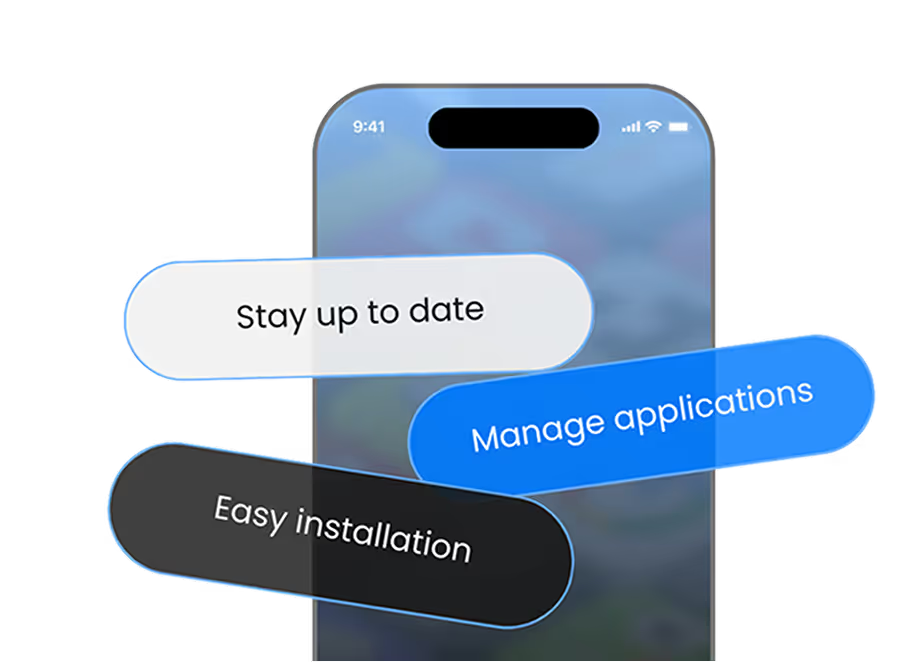
.svg)


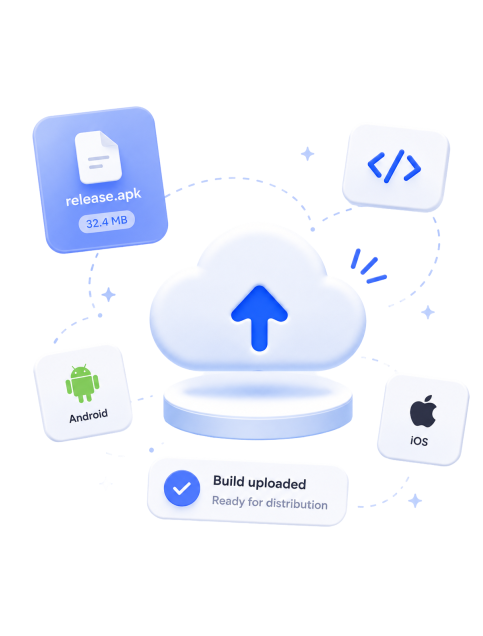
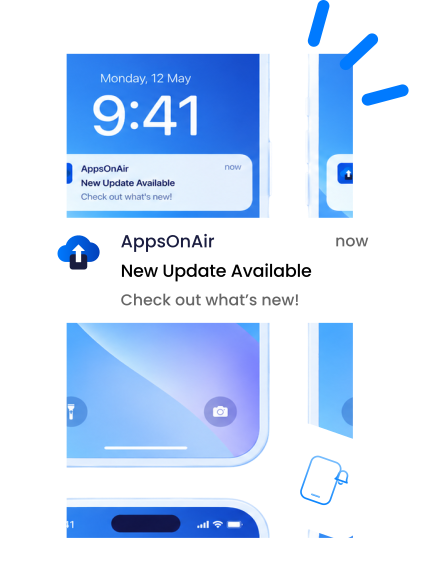

.png)
In 2026, people expect their apps and smart devices to improve without extra effort. A mobile app should become faster. A smartwatch should receive new features. A smart TV should fix bugs. A connected device should stay secure. Most users do not want to understand the technical process behind these improvements. They simply expect everything to work better over time.
This is where OTA technology plays an important role.
OTA stands for Over-the-Air. It allows apps, smartphones, smart devices, and connected products to receive updates through the internet. These updates can include bug fixes, security patches, performance improvements, new features, and app builds for testing.
In simple words, OTA technology helps businesses update software remotely.
Instead of asking users to download files manually, connect devices with cables, or visit service centers, OTA updates make the process faster and easier. For mobile app teams, OTA technology supports faster app distribution, smoother testing, and better update management. For smart devices, it helps products stay secure, useful, and reliable for a longer time.
As apps and connected devices become part of everyday life, OTA technology is becoming one of the most important tools behind modern digital experiences.
What Is OTA Technology?
OTA technology, or Over-the-Air technology, is a way to send software updates wirelessly through the internet.
These updates can be sent to mobile apps, smartphones, tablets, wearables, smart TVs, connected cars, smart home devices, and other connected systems.
OTA Technology Meaning in Simple Words
OTA technology means updating software remotely.
For example, when your smartphone receives a system update, that is an OTA update. When your smartwatch gets a new fitness feature, that is also OTA technology. When a mobile app team sends a test build to users through a link, that is another example of OTA in action.
The user does not need to visit a store or manually install complicated files. The update is delivered over the air through an internet connection.
What Does OTA Stand For?
OTA stands for Over-the-Air.
The term is commonly used in mobile apps, smartphones, smart devices, IoT products, telecom systems, and connected vehicles.
In all these areas, the basic idea is the same: software can be updated remotely without physical access to the device.
Why Is OTA Technology Important in 2026?
OTA technology is important because digital products now need to improve continuously.
Apps and devices are no longer launched once and left unchanged. They need regular updates to stay secure, useful, and competitive.
Users Expect Fast Improvements
Modern users are used to quick digital experiences. If an app crashes, loads slowly, or feels outdated, they may stop using it. If a smart device does not improve over time, users may lose interest in the brand.
OTA updates help businesses respond faster to these expectations.
Security Updates Are More Important Than Ever
Mobile apps and smart devices are connected to the internet. This means they can face security risks.
OTA technology allows businesses to send security patches remotely. This helps protect users, data, and connected systems.
Smart Devices Are Used for Years
Many smart devices stay in homes, cars, workplaces, and industries for several years. Without OTA updates, these devices can become outdated quickly.
OTA technology helps keep smart devices updated even after they have been sold.
Businesses Need Faster Release Cycles
Businesses need to launch, test, fix, and improve products faster than before. OTA technology helps reduce delays and supports faster release cycles.
This is especially useful for mobile app teams that need to share builds with testers, clients, and internal teams quickly.
How Do OTA Updates Work?
OTA updates work by sending software updates from a remote system to an app or device through the internet.
The exact process may differ depending on the app or device, but the basic flow is easy to understand.
Step 1: An Update Is Created
A team creates a new update. This could be a bug fix, new app build, security patch, performance improvement, or feature update.
Step 2: The Update Is Uploaded
The update is uploaded to an OTA platform, server, or update management system.
Step 3: The Update Is Made Available
The business decides who should receive the update. It could be all users, selected testers, specific devices, or users on older versions.
Step 4: The App or Device Checks for Updates
The app or smart device connects to the internet and checks whether a new update is available.
Step 5: The Update Is Delivered
The update is downloaded and applied based on the update process.
Step 6: The Product Improves
The app or device becomes more secure, stable, updated, or feature-rich without requiring complicated manual work from the user.
This simple process is one of the main reasons OTA technology is so valuable.
Common Examples of OTA Technology
OTA technology is already part of everyday life. Many people use it without realizing it.
Smartphone System Updates
When your phone receives a new operating system version or security patch, it is usually delivered through OTA technology.
Mobile App Testing Builds
When a mobile app team shares a test version of an app through a link or QR code, that is OTA app distribution.
Smartwatch Updates
Smartwatches often receive new health features, battery improvements, or performance updates through OTA updates.
Smart TV Updates
Smart TVs can receive interface improvements, app updates, and bug fixes remotely.
Connected Car Software Updates
Modern vehicles may receive navigation improvements, performance updates, or software patches through OTA technology.
Smart Home Device Updates
Smart locks, cameras, speakers, thermostats, and appliances can receive security and feature updates remotely.
React Native CodePush Updates
When a React Native team sends a JavaScript bundle or asset update directly to users without submitting a new app version to the App Store or Google Play, that is also an example of OTA technology.
This type of update is useful for eligible UI fixes, text changes, small bug fixes, and JavaScript-based improvements.
These examples show how OTA technology helps keep digital products updated and useful.
What Is OTA App Distribution?
OTA app distribution is the process of sharing mobile app builds wirelessly with testers, clients, internal teams, or selected users.
Instead of manually sending app files or relying only on app stores, teams can share a build using a simple install link or QR code.
Why OTA App Distribution Matters
OTA app distribution helps mobile teams share new builds faster.
This is useful before an app goes live, during quality testing, during client review, and while preparing for launch.
For example, a development team may create a new Android or iOS build. Instead of sending files manually, the team can upload the build to an OTA app distribution platform and share a link with testers.
Testers can install the build and give feedback quickly.
Benefits of OTA App Distribution
OTA app distribution helps teams:
- Share app builds faster
- Reduce manual installation steps
- Give testers easy access to the latest version
- Collect feedback sooner
- Improve collaboration
- Avoid confusion between different app versions
- Speed up release preparation
For companies building mobile apps, OTA app distribution can make the entire testing and review process smoother.
OTA Updates for Mobile Apps
OTA updates for mobile apps allow teams to improve parts of the app experience faster.
Depending on the app technology and update type, OTA updates can support bug fixes, content updates, interface improvements, or app build distribution.
Faster Testing
Testing becomes easier when app builds are distributed over the air.
Developers, testers, clients, and product managers can access the latest version quickly. This helps teams identify problems earlier.
Faster Bug Fixes
When bugs are found, teams can prepare a fix and distribute the updated build faster.
This reduces delays and improves the quality of the final app.
Better Version Management
Mobile teams often deal with multiple app versions. Some builds are for developers, some for testers, some for clients, and some for production users.
OTA technology helps teams manage these versions more clearly.
Better User Experience
When updates are faster and better managed, users receive a more stable and reliable app experience.
OTA Updates for React Native Apps
React Native is one of the most common mobile app platforms where OTA technology is especially useful.
React Native apps are built using JavaScript along with native Android and iOS components. Because a large part of the app experience can be controlled through JavaScript bundles and assets, React Native teams can use OTA update tools like CodePush to deliver certain updates faster.
In simple words, React Native CodePush allows mobile teams to push eligible JavaScript bundle updates, UI changes, bug fixes, and asset updates directly to users without waiting for a full App Store or Google Play release.
This is useful when a team needs to fix a small issue quickly. For example, if there is a UI bug, text mistake, broken screen layout, or JavaScript logic issue, a CodePush-style OTA update can help deliver the fix faster.
However, React Native CodePush is not a replacement for every type of app update. Native code changes, permission changes, SDK upgrades, native module updates, AndroidManifest changes, Info.plist changes, and major platform-level changes still require a full app store release.
That is why React Native teams need a clear OTA update strategy. CodePush should be used for the right type of updates, while major native changes should continue through the standard app release process.
AppsOnAir CodePush supports React Native teams by helping them deliver over-the-air updates for JavaScript bundles and assets. AppsOnAir documentation describes CodePush as a cloud-based service that provides OTA updates for mobile applications, allowing developers to push updates instantly.
For React Native teams, this means faster fixes, fewer unnecessary store delays, and a smoother way to improve the app experience after launch.
OTA Technology in Smart Devices
OTA technology is also transforming smart devices.
Smart devices depend heavily on software. Even if the hardware stays the same, software updates can improve how the device works.
What Are Smart Device OTA Updates?
Smart device OTA updates are remote software updates sent to connected devices through the internet.
These updates can fix bugs, improve performance, add features, and improve security.
Why Smart Devices Need OTA Updates
Smart devices are often used for a long time. A user may keep a smartwatch, smart TV, connected appliance, or smart home device for several years.
Without OTA updates, these products may become outdated.
OTA technology helps manufacturers improve products after they are already in use.
Examples of Smart Device OTA Updates
A smartwatch may receive a new workout mode.
A smart TV may receive a better home screen.
A smart security camera may receive a security patch.
A connected car may receive improved navigation software.
A smart thermostat may receive better energy-saving features.
Each example shows how OTA technology can add value after purchase.
Key Benefits of OTA Technology
OTA technology offers important benefits for users, businesses, app teams, and device manufacturers.
1. Faster Updates
OTA technology makes updates faster and easier to deliver.
Businesses can respond quickly to bugs, security needs, and user feedback.
2. Better Security
Security patches can be sent remotely.
This helps protect users, apps, devices, and data from known risks.
3. Lower Maintenance Cost
Many software issues can be fixed remotely.
This reduces the need for physical servicing, manual support, or repeated installation steps.
4. Better User Experience
Users get products that improve over time.
Apps become smoother. Devices become more reliable. Bugs are fixed faster.
5. Longer Product Life
Smart devices can remain useful for a longer time when software updates are delivered remotely.
This increases the value users get from the product.
6. Faster Feedback and Testing
For mobile app teams, OTA technology helps testers access builds quickly.
This leads to faster feedback and better app quality.
7. Better Version Control
Teams can manage different app versions more easily.
This helps avoid confusion and supports a more organized release process.
8. Faster React Native Updates
For React Native apps, OTA technology can help teams deliver eligible JavaScript bundle and asset updates faster.
With a CodePush-style workflow, teams can fix certain issues without waiting for a full app store review. This can be especially useful after a launch, during a campaign, or when a small bug affects user experience.
OTA Updates vs Traditional Updates
OTA updates are becoming more popular because they are easier and more scalable than traditional update methods.
Traditional Updates
Traditional updates may require users to download files manually, connect devices to computers, visit service centers, or wait for support teams.
This process can be slow and inconvenient.
OTA Updates
OTA updates are delivered through the internet.
They reduce manual steps and allow businesses to update apps or devices remotely.
Why OTA Updates Are Better
OTA updates are usually better because they are:
- Faster
- Easier for users
- More scalable for businesses
- Better for security patches
- Better for smart devices
- More useful for app testing and distribution
This is why OTA technology is becoming a standard part of mobile and smart device ecosystems.
OTA Technology and Security
Security is one of the biggest reasons OTA technology matters.
As apps and smart devices become more connected, they also become more exposed to risks. Businesses need a reliable way to fix security issues quickly.
Fast Security Patches
OTA updates allow businesses to send security patches remotely.
This helps reduce the time between discovering a security problem and fixing it.
Protecting User Data
Mobile apps and smart devices may handle personal data, payment details, health information, location data, or business information.
OTA security updates help protect this data.
Securing Large Device Networks
For smart device manufacturers, one issue can affect thousands or millions of devices.
OTA technology allows updates to be delivered across many devices without physical access.
OTA Technology and User Experience
Good user experience depends on reliability, speed, and trust.
OTA technology supports all three.
Fewer Bugs
When updates can be delivered faster, bugs can be fixed sooner.
This creates a smoother user experience.
Better Performance
Apps and devices can receive performance improvements over time.
This helps products stay fast and stable.
New Features Over Time
OTA updates allow businesses to add new features after launch.
This makes apps and devices feel more valuable to users.
Less Effort for Users
Users do not want complicated update steps.
OTA technology keeps the update process simple and convenient.
OTA Technology and Business Growth
OTA technology is not only useful for product teams. It also supports business growth.
Faster Product Launches
Mobile app teams can test and distribute builds faster.
This helps businesses launch products more confidently.
Lower Support Load
When updates are easier to deliver, support teams may receive fewer complaints about known bugs or outdated versions.
Better Customer Retention
Users are more likely to continue using apps and devices that work well and improve regularly.
Stronger Brand Trust
A product that stays secure and updated builds trust.
OTA technology helps businesses show users that they are actively improving the product.
Industries Using OTA Technology
OTA technology is used across many industries.
Mobile App Development
Mobile teams use OTA technology for app distribution, testing, updates, and version management.
Consumer Electronics
Smart TVs, wearables, smart speakers, and connected appliances use OTA updates to improve performance and add features.
Automotive
Connected vehicles can receive software improvements, navigation updates, and system patches remotely.
Healthcare
Healthcare apps and connected medical devices can use OTA updates to improve reliability and security.
Smart Homes
Smart cameras, locks, thermostats, and appliances use OTA updates to stay secure and functional.
Industrial IoT
Industrial devices use OTA updates to reduce downtime and improve operational efficiency.
Challenges of OTA Technology
OTA technology is powerful, but it must be managed properly.
Update Reliability
Updates must be delivered safely. A failed update can affect user experience or device performance.
Security Protection
OTA systems must be protected so only trusted updates are delivered.
Version Compatibility
Updates should work correctly across different app versions, devices, and operating systems.
Clear User Communication
Users should understand when an update is needed, especially if it is important for security or app functionality.
Choosing the Right OTA Platform
A reliable OTA platform helps businesses manage updates, distribution, access, and version control more effectively.
Why AppsOnAir Supports Modern OTA Workflows
As OTA technology becomes more important, mobile teams need a simple and reliable way to manage app distribution and updates.
AppsOnAir supports modern OTA workflows by helping teams distribute mobile app builds, manage update experiences, and simplify release processes.
AppsOnAir for OTA App Distribution
AppsOnAir helps teams distribute Android and iOS app builds over the air.
Instead of sharing files manually, teams can upload builds and share them with testers, clients, or stakeholders using simple links or QR codes.
This makes testing and app review faster and easier.
AppsOnAir for App Version and Update Management
AppsOnAir also supports update management through tools like AppSync.
Teams can manage forced updates, optional updates, and maintenance messages remotely. This helps businesses guide users to the right app version and communicate important update information clearly.
AppsOnAir for Faster Mobile App Delivery
AppsOnAir helps reduce friction in mobile app delivery.
By supporting OTA distribution and update workflows, it allows teams to move faster, collaborate better, and deliver higher-quality app experiences.
AppsOnAir as an OTA Platform for Mobile Teams
For mobile teams in 2026, OTA technology is not just a convenience. It is becoming a key part of app development and delivery.
AppsOnAir gives teams a practical way to use OTA technology for app distribution, testing, update control, and better release management.
AppsOnAir CodePush for React Native OTA Updates
AppsOnAir also supports React Native teams through AppsOnAir CodePush.
For apps built on the React Native platform, CodePush helps teams deliver eligible JavaScript bundle and asset updates over the air. This allows teams to fix certain bugs, improve screens, update copy, and refine app experiences faster without waiting for a full app store release.
This is especially valuable for React Native teams that want to move quickly while still keeping update control in place. AppsOnAir CodePush can support faster mobile delivery by helping teams reduce unnecessary release delays for the right type of updates.
Future of OTA Technology in 2026 and Beyond
OTA technology will continue to grow as more products become connected.
More Connected Devices
As smart homes, connected cars, wearables, and IoT products grow, OTA updates will become even more important.
More Personalized Updates
Businesses may deliver updates based on user type, device type, region, app version, or product behavior.
More Focus on Security
Security updates will become a major reason for OTA adoption.
Businesses will need faster ways to protect users and devices.
More Efficient App Delivery
Mobile app teams will continue using OTA technology to speed up testing, distribution, and release workflows.
More Continuous Improvement
Apps and smart devices will keep improving after launch.
OTA technology will make this continuous improvement possible.
Final Thoughts
OTA technology is transforming mobile apps and smart devices in 2026 by making updates faster, easier, and more reliable.
It helps businesses distribute app builds, test faster, fix issues, improve security, manage versions, reduce manual work, and deliver better user experiences.
For smart devices, OTA technology helps products stay useful, secure, and valuable long after purchase. For mobile apps, it helps teams manage testing, distribution, and updates more efficiently.
As users continue to expect better digital experiences, OTA technology will become even more important.
AppsOnAir supports this shift by helping mobile teams simplify OTA app distribution and update management. For businesses that want to build better mobile apps and stay competitive in 2026, OTA technology is no longer just an advantage. It is becoming a necessity.