.png)


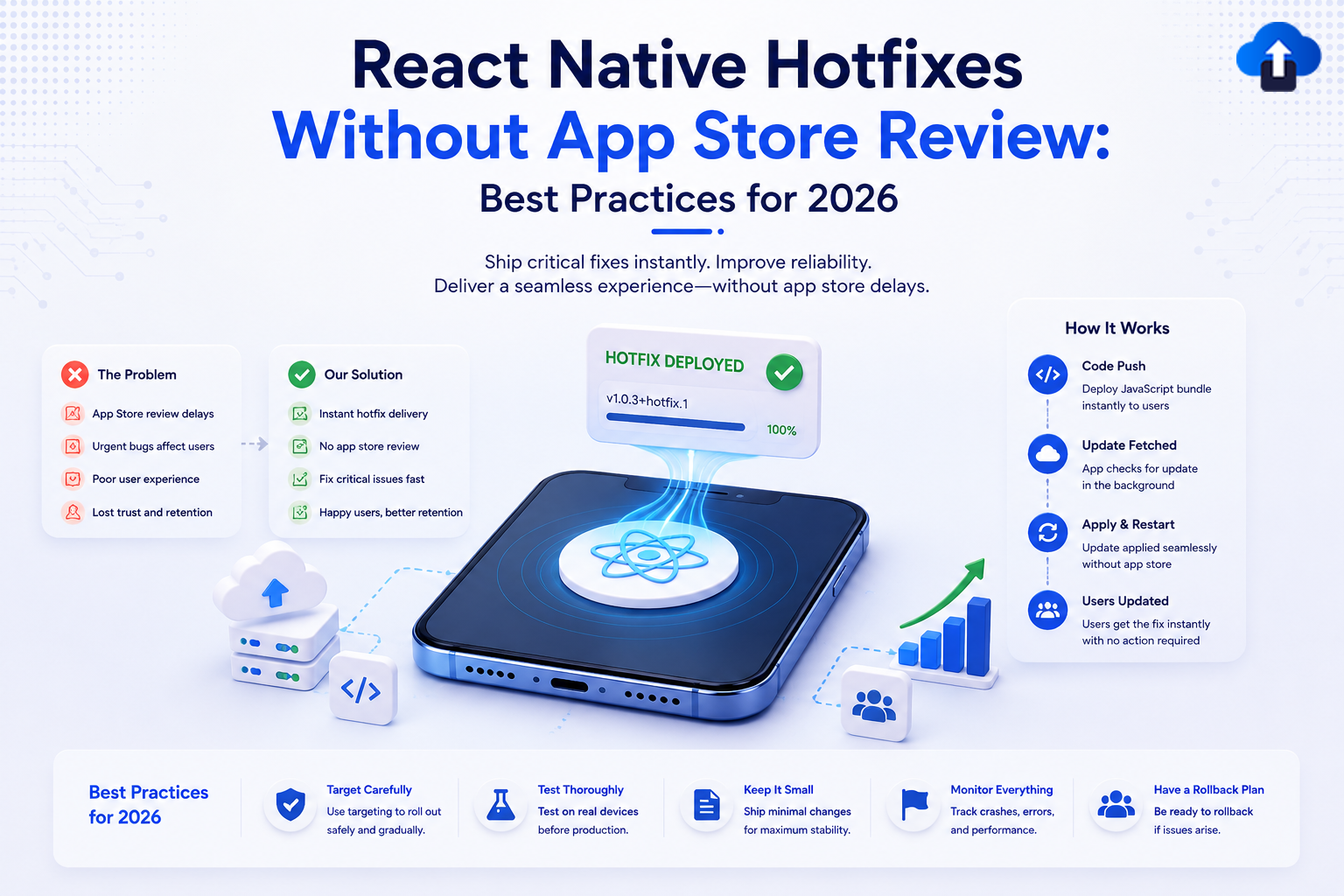
Mobile app users expect bugs to be fixed quickly. However, traditional app update workflows can slow teams down. Even a small bug fix often requires submitting a new build to the App Store or Google Play Store and waiting for approval.
For React Native teams, this delay can create serious problems. A broken checkout flow, login issue, or UI bug can affect thousands of users while the update sits in review. That is why many development teams now use over-the-air (OTA) updates to deliver hotfixes instantly.
In 2026, OTA updates have become a key part of mobile release management. They allow developers to push JavaScript and asset updates directly to users without waiting for app store approval. When used correctly, they help teams resolve critical issues faster while staying compliant with platform policies.
What Are React Native Hotfixes?
A React Native hotfix is a small update that resolves a bug, performance issue, or user experience problem in a production app. Instead of waiting for a full app store release, developers can deploy these fixes directly through an OTA update system.
How OTA Hotfixes Work
React Native applications separate much of their business logic and UI code from native code. OTA platforms distribute updated JavaScript bundles and assets to user devices.
When users open the app, the latest approved bundle is downloaded and applied. This allows fixes to reach users within minutes rather than days.
What Can Be Updated Without App Store Review?
OTA updates are generally suitable for:
- Bug fixes
- UI improvements
- Content updates
- Performance optimizations
- JavaScript logic changes
- Asset updates
These changes do not require modifications to native iOS or Android code.
What Still Requires a Store Submission?
Some changes cannot be delivered through OTA updates.
Examples include:
- New native SDK integrations
- Changes to device permissions
- Native module updates
- Operating system compatibility changes
- Major platform-specific functionality
If a change requires rebuilding the app binary, it must go through the App Store or Google Play review process.
Why OTA Hotfixes Matter in 2026
Mobile applications now release features more frequently than ever. Users expect fast improvements and immediate bug fixes.
Faster Incident Response
Production issues can damage user trust quickly. An OTA update allows teams to resolve critical bugs immediately without waiting several days for review approval.
This reduces downtime and improves the overall user experience.
Better User Retention
Users often uninstall apps after encountering serious bugs. Delivering hotfixes quickly helps maintain app stability and prevents frustration.
A smoother experience can lead to stronger retention and better app ratings.
Reduced Release Bottlenecks
Traditional release cycles involve multiple approval steps. OTA updates allow development teams to separate minor fixes from major releases.
This creates a more efficient deployment process and reduces pressure on release schedules.
Best Practices for React Native Hotfixes in 2026
While OTA updates are powerful, they should be managed carefully. Following best practices helps minimize risk and improve reliability.
Use Separate Deployment Channels
Never push updates directly to every user.
Create separate environments such as:
- Development
- Testing
- Staging
- Production
This allows teams to validate updates before a full rollout. Problems can be detected early before they impact the entire user base.
Implement Staged Rollouts
A staged rollout releases an update to a small percentage of users first.
For example:
- 5% of users
- 20% of users
- 50% of users
- 100% of users
This approach helps identify unexpected issues before widespread deployment. It is one of the most effective ways to reduce release risk.
Always Enable Rollback Capabilities
Even well-tested updates can fail in production.
A rollback mechanism allows teams to immediately revert users to a previous stable version if problems occur.
Rollback functionality should be considered essential for every OTA deployment workflow.
Track Version Compatibility
One common mistake is deploying updates that are incompatible with older app versions.
Maintain clear version targeting rules and ensure each OTA release is associated with supported binary versions.
This prevents crashes and unexpected behavior across devices.
Monitor Update Adoption
A successful deployment does not end after release.
Track metrics such as:
- Download rate
- Installation rate
- Crash rate
- Session stability
- User feedback
Monitoring helps teams verify that updates are performing as expected.
Staying Compliant With App Store Policies
Many developers worry that OTA updates violate app store rules. In reality, both Apple and Google allow certain forms of OTA updates when used correctly. Community discussions and industry guidance consistently point to bug fixes and JavaScript-based updates as acceptable use cases, while major functionality changes should still go through app review.
Avoid Changing Core App Functionality
OTA updates should not fundamentally transform the purpose of your application.
For example, a food delivery app should not become a cryptocurrency platform through an OTA update.
Major product changes should always be reviewed through official app store channels.
Do Not Circumvent Security Requirements
Security, privacy, and payment-related functionality require special attention.
Any change that affects compliance, permissions, or sensitive user data should go through a traditional store release.
Maintain Transparent Release Practices
Document OTA deployments and maintain clear release notes internally.
Good release governance helps teams stay compliant and simplifies troubleshooting.
How AppsOnAir Helps React Native Teams Ship Hotfixes Faster
Modern React Native teams need more than simple update delivery. They need deployment control, visibility, and reliability.
AppsOnAir provides React Native OTA update capabilities that help teams distribute JavaScript bundle updates without waiting for app store review. Development teams can manage releases, control rollouts, monitor deployments, and maintain a smoother release workflow.
This approach allows organizations to respond to production issues faster while maintaining a structured release process.
Common Mistakes to Avoid
Many OTA deployment problems come from process issues rather than technology limitations.
Pushing updates directly to all users without testing is a common mistake. Skipping staged rollouts increases deployment risk significantly.
Another frequent issue is poor version targeting. An update may work perfectly on one app version while causing failures on another.
Teams should also avoid treating OTA updates as a replacement for app store releases. Native changes, SDK upgrades, and platform updates still require traditional submissions.
Finally, failing to monitor deployments after release can delay issue detection and make rollback decisions more difficult.
Frequently Asked Questions
Can React Native hotfixes completely replace app store updates?
No. OTA updates can deliver JavaScript and asset changes, but native code modifications still require app store submissions.
Are OTA updates allowed by Apple and Google?
Yes. Both platforms generally allow OTA updates for bug fixes, UI changes, and JavaScript-based improvements, provided they do not fundamentally alter the app's purpose or violate platform policies.
What is the biggest risk of OTA updates?
The biggest risk is deploying an untested update to all users. Using staged rollouts, monitoring, and rollback capabilities helps minimize this risk.
Do OTA updates improve user experience?
Yes. Users receive important fixes faster, which reduces frustration and helps maintain app performance and reliability.
What should every React Native OTA workflow include?
A reliable workflow should include testing environments, staged rollouts, version targeting, monitoring, and instant rollback capabilities.
Final Thoughts
React Native hotfixes have become an essential part of mobile release management in 2026. Users expect fast fixes, and businesses cannot afford to wait days for app store approval when critical issues appear.
OTA updates allow teams to resolve bugs quickly, improve stability, and maintain a better user experience. However, success depends on following proven best practices such as staged rollouts, rollback mechanisms, version targeting, and deployment monitoring.
By combining a disciplined release strategy with modern OTA infrastructure, React Native teams can deliver hotfixes faster while maintaining reliability, compliance, and user trust.