Blogs

Featured Post

Mobile Wrapped August 2026 – key updates for Android 16 API 36, iOS 27, Flutter 3.47 and React Native 0.87 across ecosystems
Newsletter
All
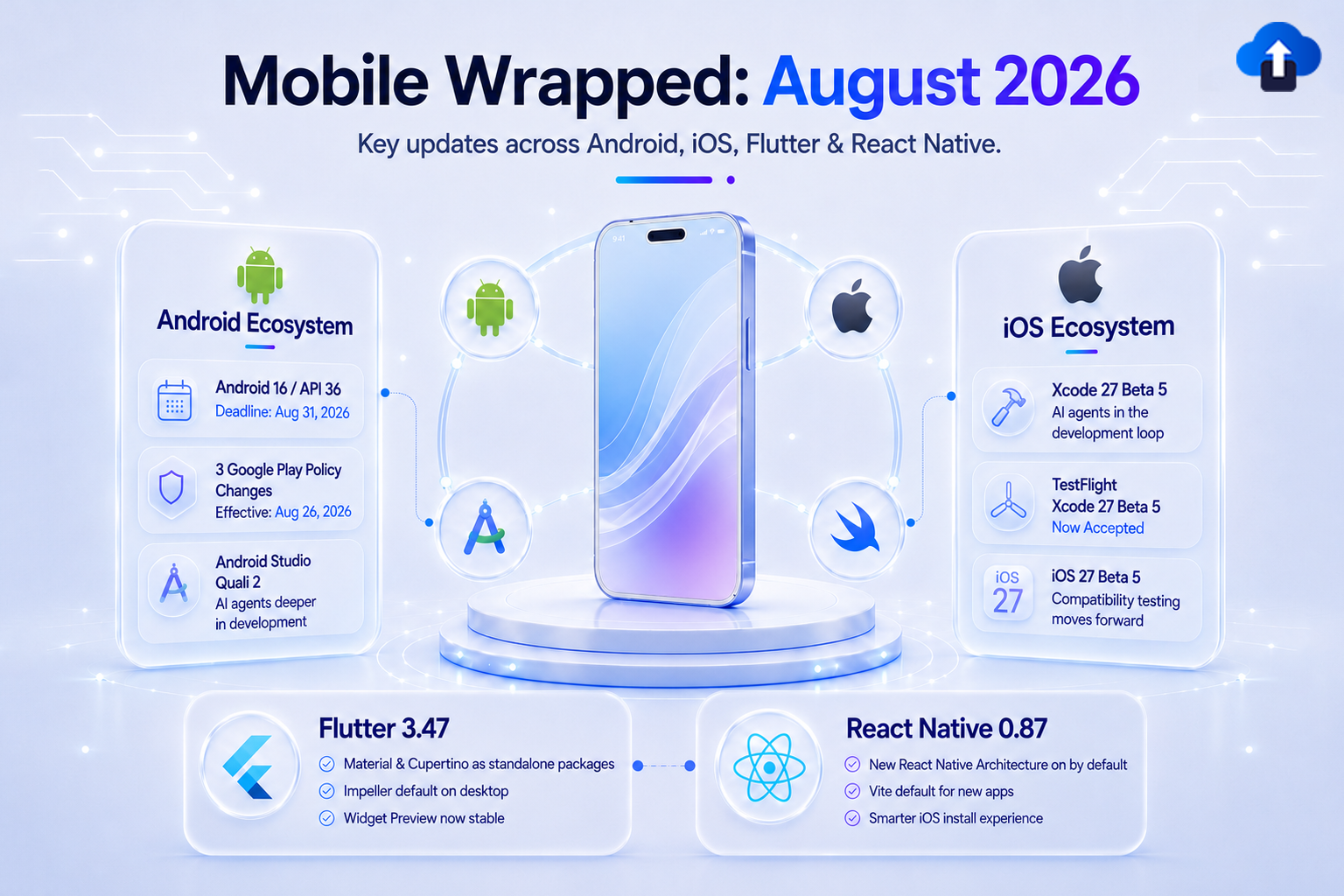
Mobile Wrapped: August 2026
Stay ahead in mobile development with August 2026 updates. Explore Android 16 target SDK mandates, Google Play billing policies, and multi-agent AI workflows.

Filter
Marketing infographic showcasing a branded short link interface and smartphone to demonstrate how custom URLs boost mobile app SEO and user trust.
Mobile App Strategy
All
How Branded Short Links Boost SEO and User Trust for Mobile Apps
Explore how branded short links boost mobile app SEO and user trust. Master deep linking best practices to create a seamless web-to-app user journey that converts.
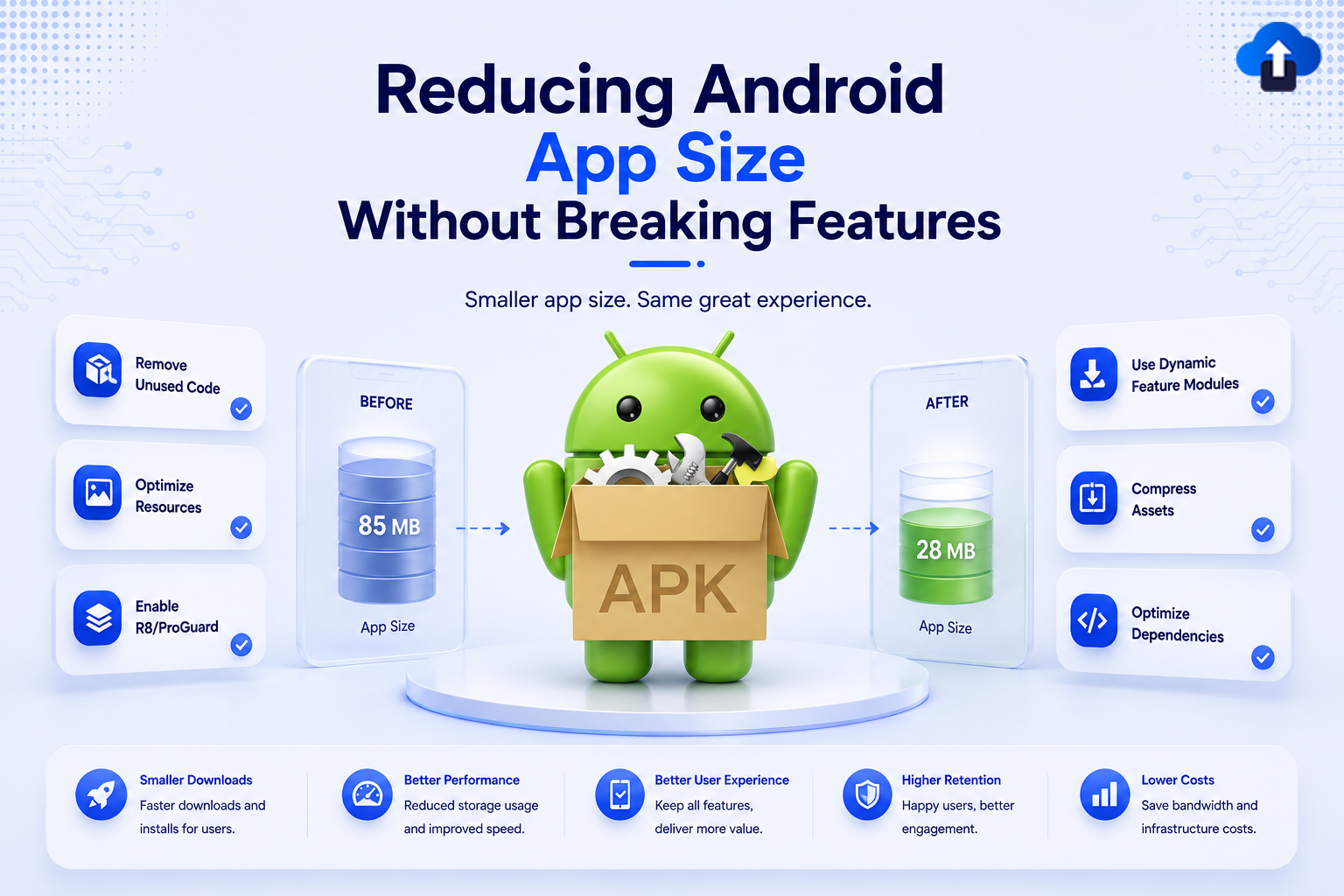
Infographic illustrating how to reduce Android app size from 85MB to 28MB using optimization techniques like removing unused code, compressing assets, and enabling ProGuard.
Mobile App Development
All
Reducing Android App Size Without Breaking Features
Optimize Android app size to drive higher install conversions. Explore battle-tested techniques to shrink APK assets and code safely without breaking features.
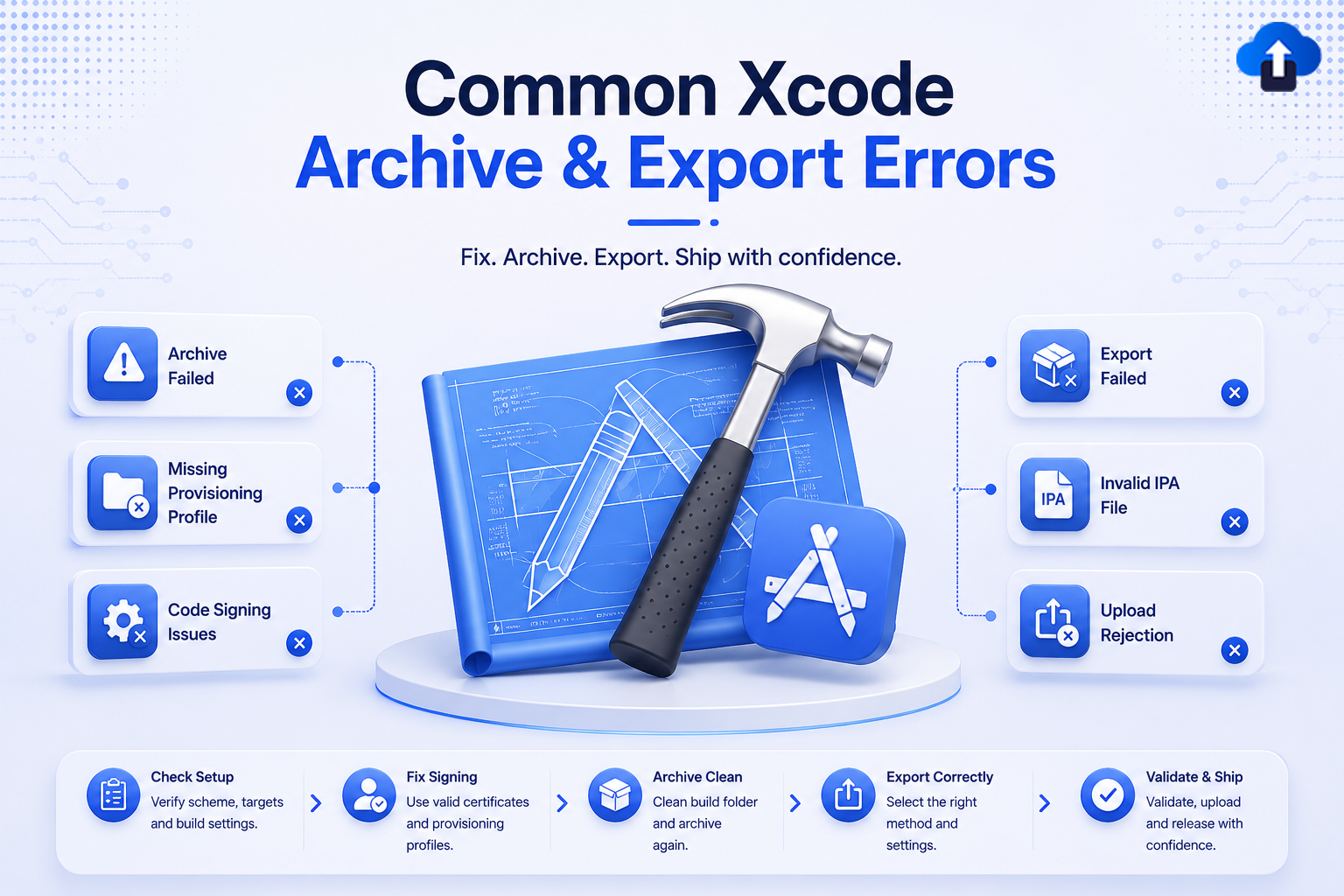
Troubleshooting guide for common Xcode archive and export errors, featuring a 3D blueprint, hammer, App Store icon, and developer workflow steps.
Developer Tutorials
All
Common Xcode Archive & Export Errors: A Complete Fix Guide for iOS Developers
Troubleshoot Xcode archive and export errors efficiently. Master iOS code signing, provisioning profiles, and entitlements to build and upload your .ipa file.
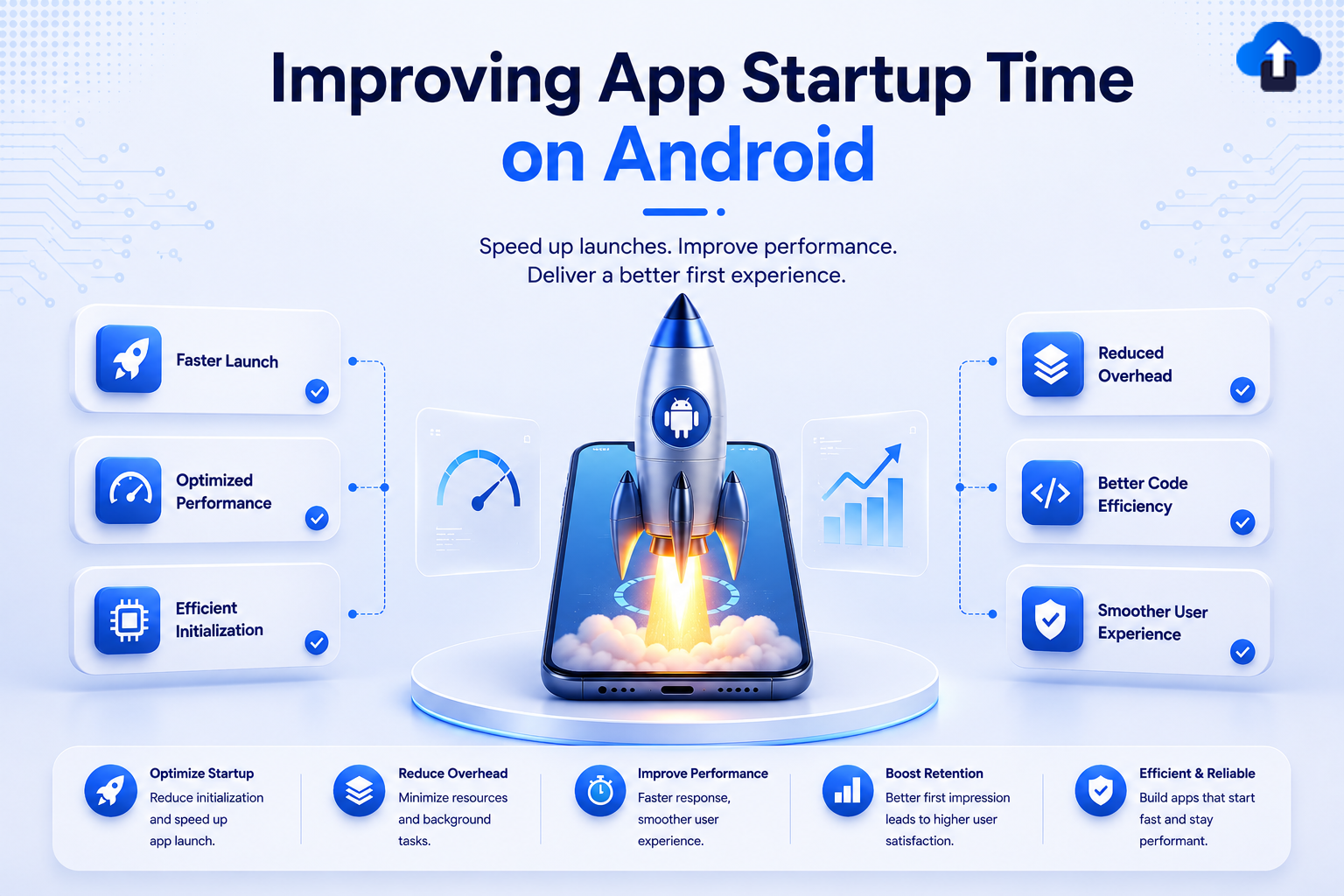
Performance optimization infographic showing a rocket launching from a smartphone screen to illustrate improving Android app startup time.
Mobile App Development
All
Improving App Startup Time on Android
Don't lose users to slow load times. Learn battle-tested techniques to optimize your Android app startup time, improve Play Store ratings, and retain users.
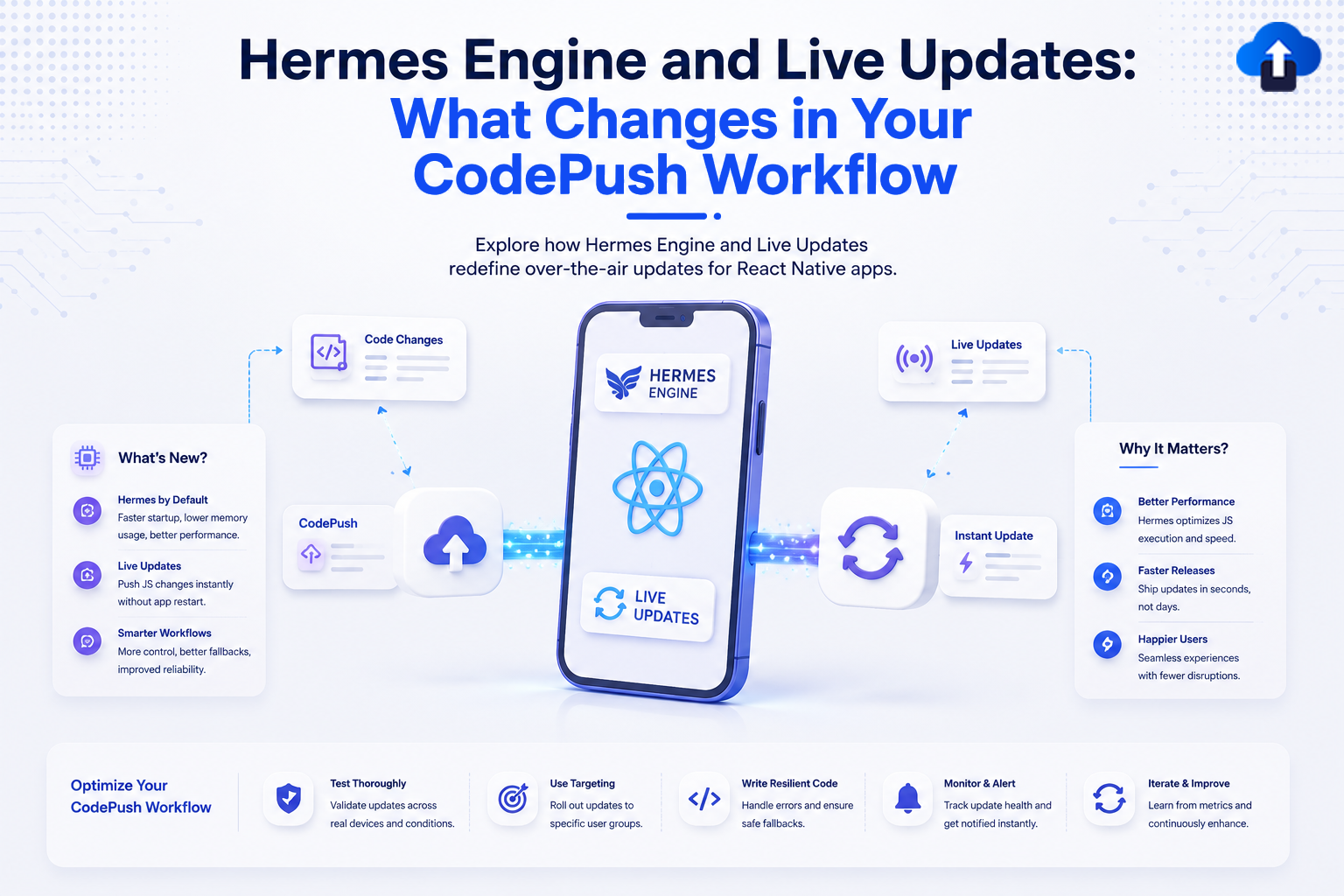
A technical React Native development infographic titled "Hermes Engine and Live Updates: What Changes in Your CodePush Workflow," subtitled "Explore how Hermes Engine and Live Updates redefine over-the-air updates for React Native apps." The visual centerpiece shows a 3D smartphone displaying the React Native framework logo, labeled with "Hermes Engine" and "Live Updates," connected via data streams to CodePush cloud and instant update sync icons. The left panel features "What's New?" highlighting Hermes by Default, Live Updates, and Smarter Workflows. The right panel explains "Why It Matters?" highlighting Better Performance, Faster Releases, and Happier Users. The bottom horizontal footer outlines five ways to "Optimize Your CodePush Workflow": Test Thoroughly, Use Targeting, Write Resilient Code, Monitor & Alert, and Iterate & Improve.
Mobile App Strategy
All
Hermes Engine and Live Updates: What Changes in Your CodePush Workflow
Using Hermes with CodePush? Learn how the Hermes JavaScript engine changes your live update workflow and discover best practices for 2026 OTA updates.
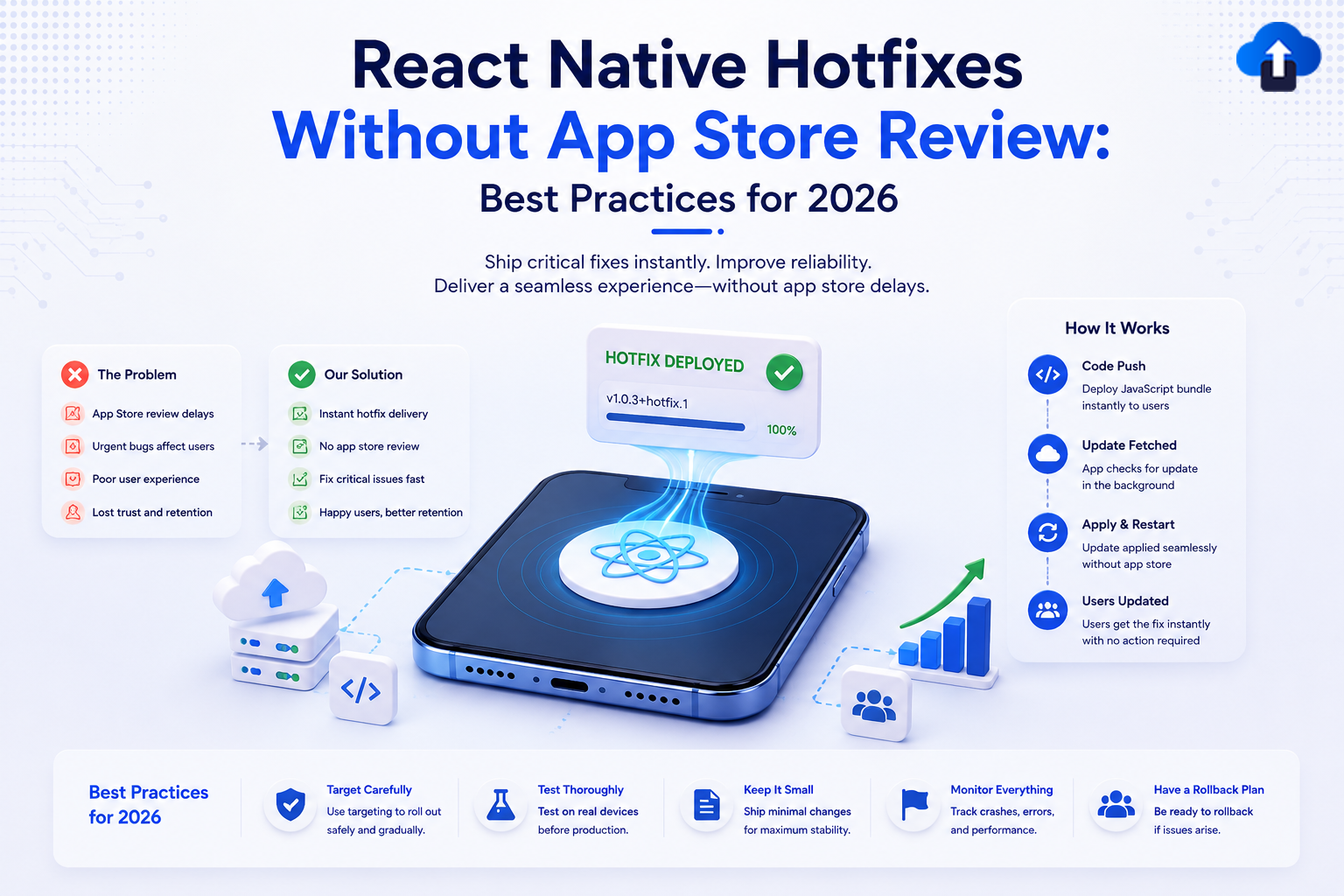
A DevOps and mobile product strategy infographic titled "React Native Hotfixes Without App Store Review: Best Practices for 2026," with the subtitle "Ship critical fixes instantly. Improve reliability. Deliver a seamless experience—without app store delays." The central graphic features a 3D smartphone displaying a glowing React framework logo projecting a "HOTFIX DEPLOYED v1.0.3+hotfix.1 100%" success notification badge. The left card contrasts "The Problem" (App Store review delays, urgent bugs, poor UX, lost trust) with "Our Solution" (instant hotfix delivery, no store review, fast fixes, better retention). The right sidebar outlines "How It Works" in a 4-step pipeline: Code Push, Update Fetched, Apply & Restart, and Users Updated. The bottom bar details "Best Practices for 2026": Target Carefully, Test Thoroughly, Keep It Small, Monitor Everything, and Have a Rollback Plan.
App Release Management
All
React Native Hotfixes Without App Store Review: Best Practices for 2026
Fix critical React Native bugs instantly. Learn the best OTA update practices for 2026 to deploy hotfixes without waiting for App Store approval.
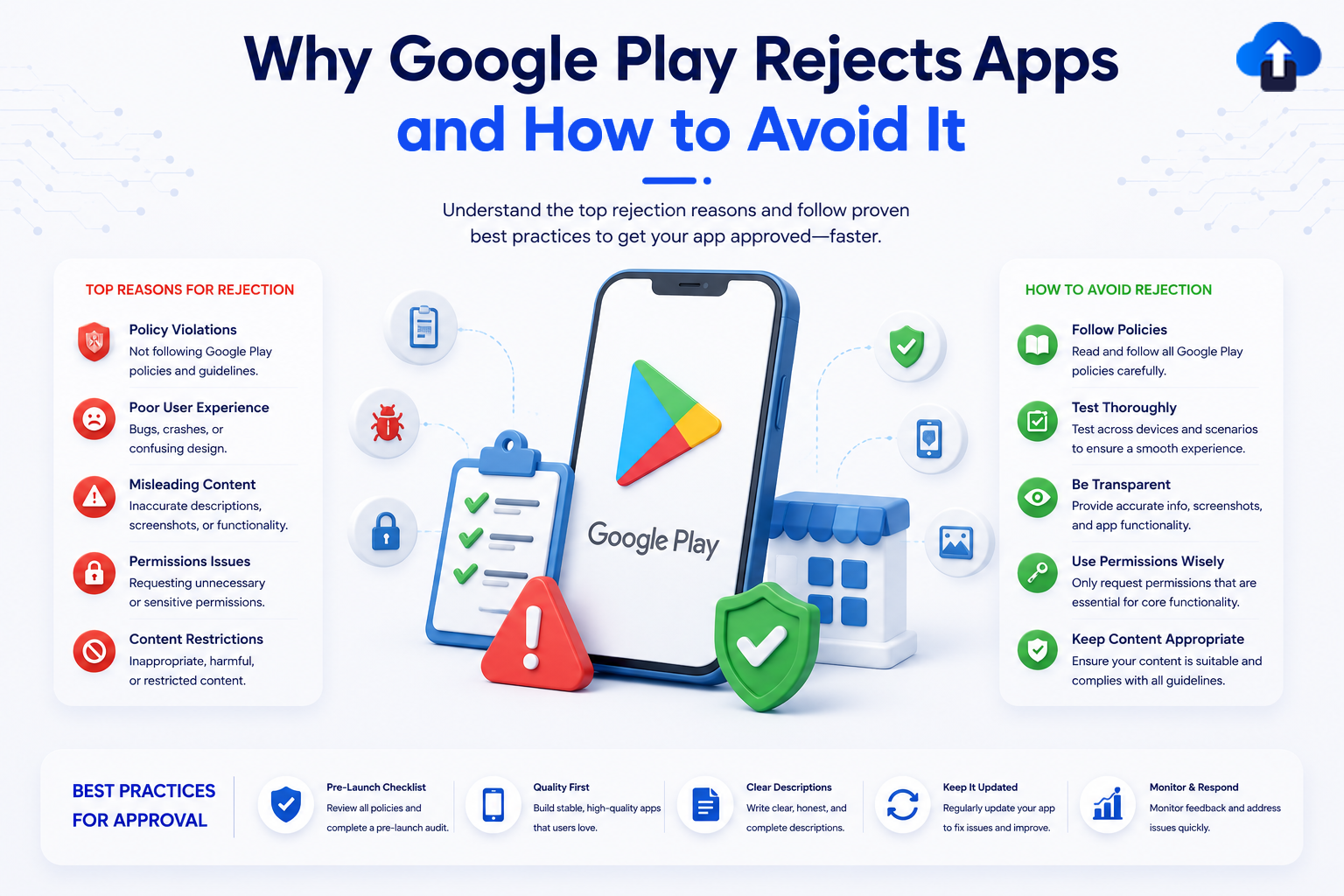
An educational mobile app development infographic titled "Why Google Play Rejects Apps and How to Avoid It," with the subtitle "Understand the top rejection reasons and follow proven best practices to get your app approved—faster." The layout features a central 3D smartphone mockup showing the Google Play Store logo surrounded by UI icons like a checklist, a bug, and a warning symbol. The left side details "Top Reasons for Rejection," including Policy Violations, Poor User Experience, Misleading Content, Permissions Issues, and Content Restrictions. The right side outlines "How to Avoid Rejection" with steps like Follow Policies, Test Thoroughly, Be Transparent, Use Permissions Wisely, and Keep Content Appropriate. A bottom horizontal banner features a 5-step "Best Practices for Approval" workflow: Pre-Launch Checklist, Quality First, Clear Descriptions, Keep It Updated, and Monitor & Respond.
App Release Management
All
Why Google Play Rejects Apps and How to Avoid It
Avoid a costly Google Play Store app rejection. Learn the top policy violation reasons—from metadata errors to background permissions—and how to fix them.
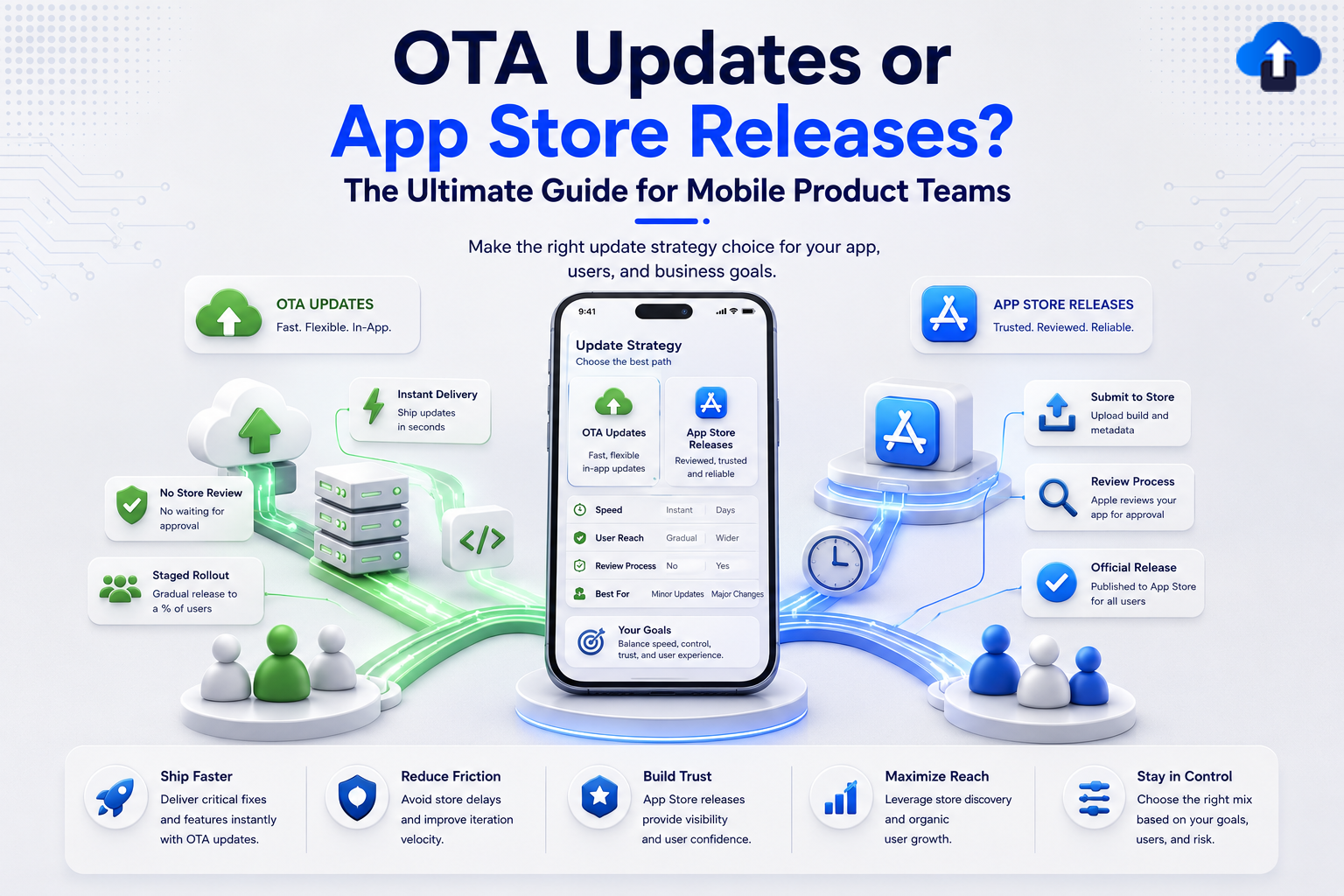
An infographic comparing mobile deployment strategies titled "OTA Updates or App Store Releases? The Ultimate Guide for Mobile Product Teams." The center features a smartphone comparing both paths across Speed, User Reach, and Review Process. The left green section highlights Over-the-Air (OTA) Updates, listing benefits like Instant Delivery (shipping updates in seconds), No Store Review (no waiting for approval), and Staged Rollout (gradual release to a percentage of users). The right blue section highlights App Store Releases, showing the traditional pipeline: Submit to Store (uploading build and metadata), Review Process (Apple app approval), and Official Release. A bottom comparison bar details core outcomes: Ship Faster, Reduce Friction, Build Trust, Maximize Reach, and Stay in Control.
App Release Management
All
OTA Updates or App Store Releases? The Ultimate Guide for Mobile Product Teams
Don't let app store review delays hurt user retention. Discover when to use OTA updates to bypass the queue and ship critical bug fixes instantly.
An Android development infographic titled "Fixing Out Of Memory Errors in Android to build stable, high-performance apps." The central graphic features a smartphone screen simulating an Android Recovery crash with an "Out Of Memory" installation aborted error message next to a fallen Android robot mascot. The left card details Common Causes: Memory Leaks (holding references too long), Large Bitmaps (loading high-resolution images unnecessarily), Unclosed Resources (cursors, streams, and unreleased listeners), and Too Many Objects (excessive loop object creation). The right section shows a gauge indicating "High Usage." A bottom horizontal banner outlines a 6-step troubleshooting workflow: 1. Profile Memory, 2. Fix Memory Leaks, 3. Optimize Images, 4. Release Resources, 5. Reduce Object Overhead, and 6. Test on Real Devices.
Developer Tutorials
All
Fixing OutOfMemory Errors in Android
Is your Android app crashing due to OutOfMemory errors? Discover the core causes of runtime memory issues and explore proven fixes to stabilize your app.